
A-brands, competitive prices
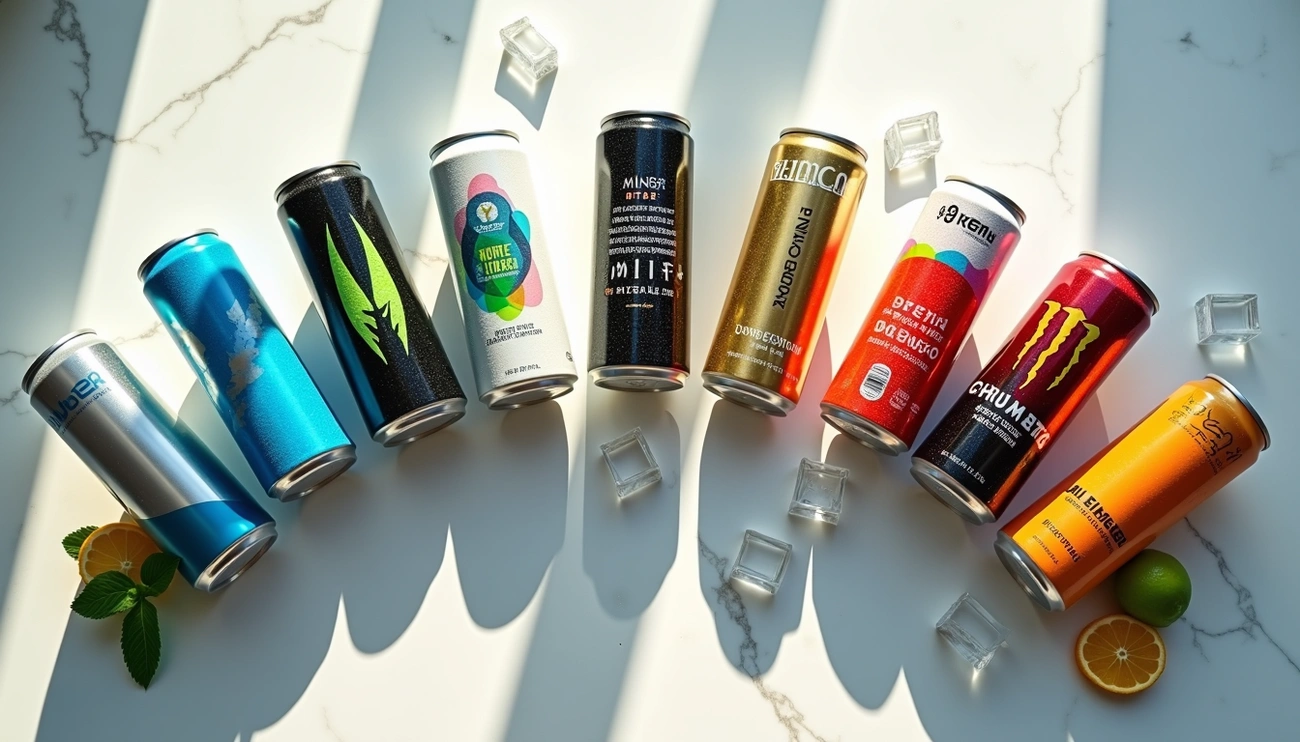
Energy drinks are growing faster than any other soft drink category. Red Bull created this market in 1987 and thereby opened a sector that now generates billions for hospitality, retail and vending. Business buyers need to know which brands control the market in order to make assortment choices that yield profit.
This article presents seven energy drink brands that dominate sales in 2026. For each brand you get market position, popular flavors, pricing strategy and profit margin. This information helps you determine which energy drinks best suit your customers and your business operations.
Red Bull – The Global Pioneer
WHAT MAKES RED BULL UNIQUE
Dietrich Mateschitz launched Red Bull on April 1, 1987 in Austria and thereby created an entirely new product category. The brand holds the first-mover advantage and remains market leader through consistent quality and worldwide availability.
The formula contains taurine, 80 mg of caffeine per 250 ml, B vitamins (B3, B5, B6, B12) and 27 grams of sugar from sugar beets. All ingredients are synthetically produced, which offers a quality guarantee regardless of production location. No animal ingredients make the product suitable for diverse customer groups.
MARKET POSITION AND SALES FIGURES
Red Bull sold 13.969 billion cans in 2025, a growth of 10.2%. Group revenue rose 8.6% to 12.196 billion euros. The brand maintains a 35% market share in the United States with 92% brand recognition.
Operations in 178 countries with 21,924 employees guarantee reliable delivery. Sports investments of more than 1 billion euros in Formula 1, football and cycling strengthen brand identity among specific target groups.
MOST POPULAR FLAVORS AND VARIANTS
The assortment consists of three core products:
The Netherlands offers 8 to 12 flavors including Peach Edition, Red Edition (watermelon), Blue Edition (blueberry), Yellow Edition (tropical fruit) and Apricot Edition. Seasonal releases create sales peaks and require strategic inventory management.
PRICING AND PROFIT MARGIN
Red Bull maintains premium pricing with record profits in 2024. Dividend payouts of 866 million euros in 2021 show strong profitability. Distribution via supermarkets, gas stations and online channels ensures broad availability.
For retailers, the premium positioning means stable margins with consistent demand. Customers pay more for brand recognition and reliability. Fast delivery and inventory security support continuous availability in assortments.
Monster Energy – The Challenger with Attitude
WHAT MAKES MONSTER ENERGY UNIQUE
Monster Energy deliberately chooses rebellion against established energy drink conventions. The brand focuses on men between 18 and 35 years old by creating a lifestyle around extreme sports, gaming and rock music. This strategy avoids traditional TV commercials and invests fully in sponsoring motorsport, UFC, heavy metal bands and gaming events.
The results speak for themselves. A NASCAR sponsorship in 2016 generated 4.3 billion online impressions. Partnerships with Lewis Hamilton, Conor McGregor and Post Malone build a community that actively promotes the brand. For retailers this means organic brand promotion that increases marketing efficiency.
The product format distinguishes Monster directly from competitors. Standard cans contain 500 ml versus the usual 250 ml. Higher caffeine levels reinforce the energy boost. This combination of larger volume and stronger effect creates value perception among buyers who want more for their money.
MARKET POSITION AND SALES FIGURES
Monster Beverage Corporation achieved exceptional performance in 2025 and early 2026. The fourth quarter of 2025 closed with $2.13 billion in revenue, an increase of 17.6%. The Monster Energy Drinks division grew by 18.9% to $1.99 billion.
The first quarter of 2026 confirmed this growth trend. Total revenue rose 26.9% to €1.91 billion. Net profit climbed 28.6% to €542.95 million. These figures show that Monster is growing faster than the energy drinks category average, which means market share gain.
International sales drive the growth. Outside the United States, revenue rose 44.9% to €0.95 billion, accounting for 45% of total sales. This marks the highest international share ever in a single quarter. Dutch growth of 180% to 65 million euros made Monster the fastest riser among all supermarket brands. This worldwide availability guarantees reliable inventory for wholesalers and retailers.
MOST POPULAR FLAVORS AND VARIANTS
Monster maintains four main product lines:
One third of Monster's sales consist of sugar-free variants. The brand leads with 32 kcal per 100 ml versus the market average of 41 kcal. This diversity enables hospitality and retail to serve health-oriented demand without revenue loss.
Monster develops each flavor as a unique drink with specific ingredients, no added aromas. The worldwide assortment comprises more than 150 flavors. Popular ingredients are guarana, ginseng and L-carnitine for energy and focus.
PRICING AND PROFIT MARGIN
Monster's pricing strategy works as a powerful profit engine. The third quarter of 2025 improved the gross margin to 55.7% against 53.2% a year earlier. This improvement came through price adjustments, fewer promotions and a better product mix.
Additional price increases on November 1, 2025 in the United States are expected to have minimal volume impact. Strong category growth of 12.2% in the last 13 weeks supports this confidence. Energy drinks remain affordable compared to coffee bar alternatives, which creates pricing room.
Compared to Red Bull, Monster offers a lower price per milliliter. A 500 ml can often costs the same as 250 ml of Red Bull, making Monster's 'One Can fit for Two' proposition attractive for price-conscious buyers. For retailers this means stable margins with growing volumes, reinforced by the fact that consumers increasingly choose sugar-free variants with higher margins.
Rockstar Energy – The Rock Star Among Energy Drinks
WHAT MAKES ROCKSTAR UNIQUE
PepsiCo bought Rockstar in 2020 for €3.67 billion and gained access to an energy drink brand from 2001. This acquisition ended a distribution contract that prevented PepsiCo for years from developing its own energy drinks. The company completely renewed Rockstar to reach a broader audience.
Rockstar received a new visual identity in 2024, the first major change since the PepsiCo acquisition. The design retains the golden star but uses bright colors and a flavor-oriented approach. This 'flavour-forward' strategy breaks with dark energy drink conventions. Lively repeating star shapes visualize the diverse flavor assortment.
The 'Press Play' marketing platform from 2023 focuses on 'Everyday Rockstars' – young people between 18 and 35 years old who work hard daily. This positioning differs from energy drinks that target top athletes. Vrumona distributes Rockstar in the Netherlands with a focus on sugar-free variants, comparable to their Pepsi MAX strategy.
MARKET POSITION AND SALES FIGURES
Rockstar held a 10% worldwide market share in 2020 as the third player after Red Bull and Monster. This position is under pressure. Volumes in the United Kingdom fell 22.5% while the category grew 6.4%. Retail value shrank from £32.1 million to £17.3 million.
PepsiCo adjusted the strategy by selling American and Canadian rights in 2025 to Celsius Holdings. PepsiCo manages Rockstar internationally and concentrates on markets with growth potential. PepsiCo's distribution power combines with targeted marketing for recovery.
The new visual identity rolled out in the UK, Poland and Germany from January 2024. Social media showed a 20:1 positive sentiment ratio on the first posts. For retailers this means increased brand visibility through active investments.
MOST POPULAR FLAVORS AND VARIANTS
The Dutch assortment contains seven core flavors:
Vrumona chooses a sugar-free focus with golden Original No Sugar as the spearhead. An Original variant with 56% less sugar helps consumers get used to less sweet flavors. This approach responds to the fact that 80% of energy drinks are still sugar-containing. Shopper research shows that consumers find sugar-free energy drinks less flavorful.
PRICING AND PROFIT MARGIN
Rockstar positions itself as a budget alternative with lower prices than Red Bull. This strategy offers retailers stable volumes at smaller margins per unit. The brand focuses on price-conscious energy drink buyers.
Availability from May 2026 via gas stations, Albert Heijn, Jumbo, Plus and other supermarkets guarantees broad distribution. Vrumona ensures fast delivery and inventory security. PepsiCo invests in classic advertising and social media via Twitch, TikTok and Snapchat. This marketing supports retail sales by increasing brand recognition among young people.
Prime Energy – The Social Media Sensation
WHAT MAKES PRIME UNIQUE
Logan Paul and KSI launched Prime in 2022 as a direct attack on established sports drink brands. Their combined reach of more than 100 million followers made traditional marketing unnecessary. The brand emerged from a collaboration between former online rivals who mobilized their audience for commercial success.
Prime Hydration contains 10% coconut water, no added sugars, BCAAs, electrolytes and zinc. A serving delivers about 20 kilocalories. The company positions itself as a healthier alternative to Gatorade with a focus on hydration. Prime Energy, by contrast, contains 200 mg of caffeine per serving, considerably more than market standards. This high dosage caused criticism because of marketing toward young people.
Sponsorship deals with Arsenal FC, UFC and WWE created sporting credibility. These partnerships reached target groups that traditional energy drink brands also pursue. The Dutch Nutrition Center advises against energy drinks for young people under eighteen years, while Prime Energy became popular on school playgrounds.
MARKET POSITION AND SALES FIGURES
Prime's sales figures show a dramatic turnaround after the initial hype. In the United Kingdom, revenue fell by 70.7% from £112.2 million to £32.8 million. Net profit collapsed by 91.6% from £3.72 million to £312,393. American sales plummeted by 40% during the first half of 2024. The company attributes this contraction to fewer repeat purchases, lower spending per customer and reduced new customer acquisition.
Prime Energy realizes £526,000 in sales monthly, just 0.31% of the total energy drink category. This marginal position contrasts sharply with the viral attention the brand generated. Retailers reported inventory surpluses at the end of 2024 where Prime products were dumped far below regular selling prices. For wholesalers this means increased inventory risk when purchasing larger volumes.
The company announced a strategic review to shift from 'hyper-growth to a sustainable long-term position'. Prime Ice, launched at the beginning of 2025, represents an attempt to recover demand. Specific sales figures remain unknown.
MOST POPULAR FLAVORS AND VARIANTS
Prime offers eleven flavors including Tropical Punch, Ice Pop, Blue Raspberry, Grape, Orange, Lemon Lime, Fruit Punch and Meta Moon. The assortment distinguishes Prime Hydration without caffeine from Prime Energy with high caffeine content. This division causes confusion among consumers who wrongly regard Prime Hydration as an energy drink.
Prime Energy has been banned in the Netherlands since August following an investigation by the Food and Consumer Product Safety Authority. The agency found harmful effects due to excessively high dosages of nutrients. For Dutch retailers only Prime Hydration remains legally sellable, which limits assortment choice.
PRICING AND PROFIT MARGIN
Prime maintains a premium price of about €14 per bottle or can in the Netherlands. This pricing lies far above established energy drink brands and reflects artificial scarcity during the launch. School playgrounds became sales channels where young people traded Prime bottles for inflated amounts.
For hospitality and retail, Prime brings considerable uncertainty. Brand advisors predict that Prime will not survive its hype because it has no existing audience to fall back on. The collectibility aspect does not work for repeat purchases, comparable to trading cards where demand stops after completion. Trademark applications for alcohol, protein bars and CBD suggest that the owners are maximizing profit before they sell the brand.
Comparison Table – 7 Energy Drinks That Dominate the Market in 2026
BrandMarket PositionCaffeine ContentSugar-Free OptionsPopular FlavorsPrice PositionMain Target GroupUnique Selling Point
| Red Bull | Market leader worldwide, 35%+ market share US, 13.969 billion cans sold (2025) | 80 mg per 250 ml | Yes (Sugarfree & Zero) | Original, Peach Edition, Red Edition (watermelon), Blue Edition (blueberry), Yellow Edition (tropical fruit), Apricot Edition | Premium pricing, record profits 2024 | Broad audience, 92% brand recognition US | Pioneer since 1987, high-quality synthetic ingredients, worldwide availability in 178 countries |
| Monster Energy | No. 2 worldwide, fastest growth (+26.9% Q1 2026), 180% growth Netherlands to €65 million | Higher than average (500 ml cans) | Yes (Ultra line, 1/3 of sales) | Ultra White, Ultra Paradise, Mango Loco, Pacific Punch, Pipeline Punch, Java Monster | Lower price per ml than Red Bull, gross margin 55.7% | Men 18-35 years, extreme sports, gaming | Larger cans (500 ml), lifestyle marketing via sponsoring, 150+ flavors worldwide |
| Rockstar Energy | No. 3 worldwide (10% market share 2020), declining volumes UK (-22.5%) | Not stated | Yes (focus on sugar-free in NL) | Original, Mango, Blueberry Pomegranate, Tropical Guava, Strawberry Lime Zero Sugar, Watermelon Kiwi Zero Sugar | Budget-friendly, lower than Red Bull | 'Everyday Rockstars' 18-35 years, daily workers | New visual identity 2024, 'flavour-forward' approach, PepsiCo distribution |
| Prime Energy | Marginal (0.31% energy drinks category), -70.7% revenue UK, -40% sales US | 200 mg per serving (very high) | Yes (Prime Hydration without caffeine) | Tropical Punch, Ice Pop, Blue Raspberry, Grape, Orange, Lemon Lime, Meta Moon | Premium €14 per bottle/can Netherlands | Young people, social media followers of Logan Paul & KSI | Social media hype, influencer-driven, banned in Netherlands since August |
BUSINESS PURCHASING GUIDELINES
1. INVENTORY SECURITY
Three brands guarantee reliable availability:
2. PROFIT MARGIN OPTIMIZATION
3. GROWTH MARKETS
4. RISK FACTORS
5. ASSORTMENT STRATEGY
Optimal coverage requires three categories:
Conclusion
These four energy drink brands determine which volumes and margins you achieve in 2026. Red Bull and Monster deliver guaranteed revenue through brand recognition and broad demand. Nocco serves the growing fitness category with functional ingredients. Hell Energy combines low purchase prices with stable quality. Rockstar benefits from PepsiCo's distribution network for better availability. Boost attracts consumers who prefer natural alternatives.
Three criteria determine your assortment choice: delivery security, profit margin and customer fit. Combine a market leader with niche options for full market coverage. Sugar-free variants grow faster than regular versions, so give these sufficient shelf space. Choose brands that match your customer profile and inventory capacity. The energy drink category continues to grow – select the right brands to profit from this.
A note on the original text: the article is titled "7 Energy Drinks" and the comparison table header says "7," but only four brands are actually detailed (Red Bull, Monster, Rockstar, Prime), and the conclusion references several others (Nocco, Hell Energy, Boost) that don't appear elsewhere. I translated faithfully, but you may want to reconcile these inconsistencies in the source.