
A-brands, competitive prices
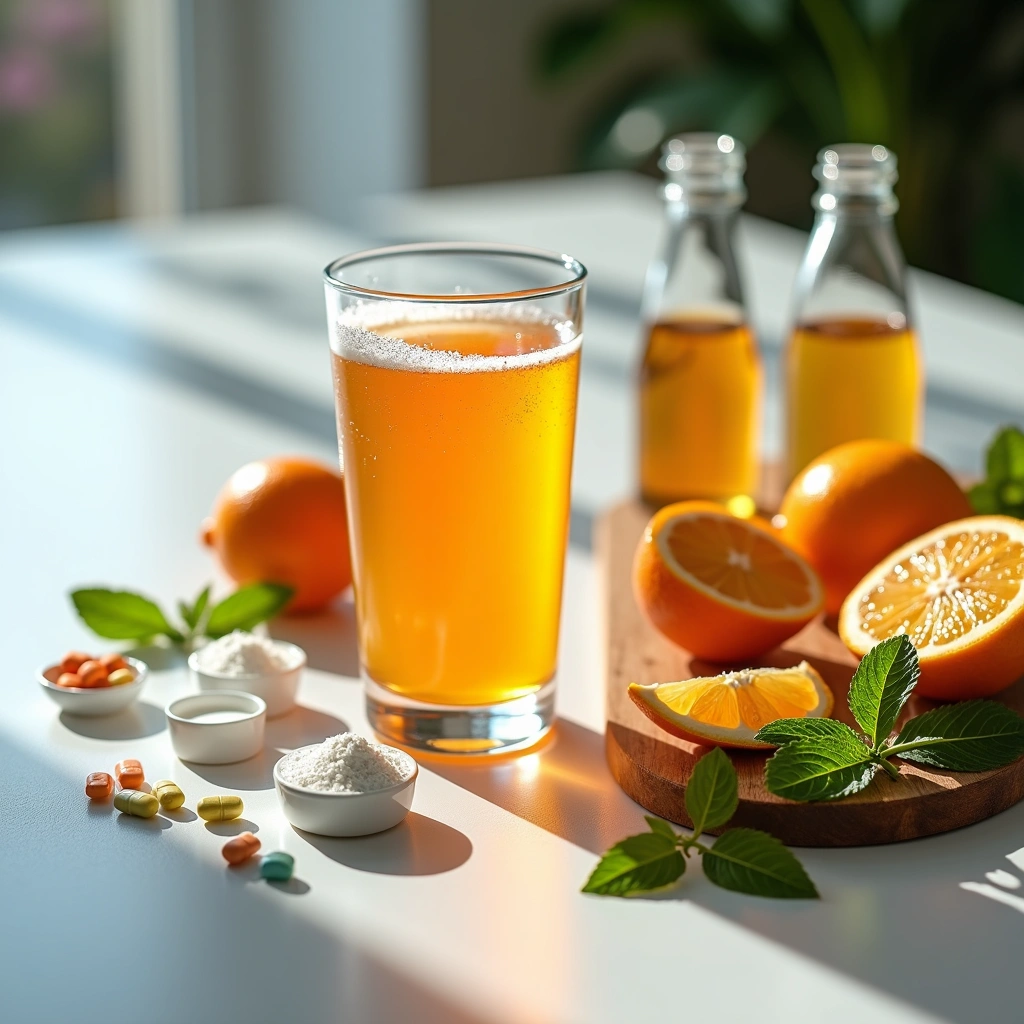
What's Really in Your Glass?
Artificial vs. Plant-Based Additives in Soft Drinks
Artificial additives in soft drinks are increasingly up for debate. Regular soft drinks contain zero per cent valuable nutrients and instead plenty of calories and sugar. Consumers want to know exactly what's in their glass. That means you, as a hospitality operator or retailer, need to make informed choices in your range.
On the one hand, there are artificial ingredients such as aspartame and sucralose, which are 100 to 600 times sweeter than sugar but provide virtually no calories. On the other hand, we see a growing demand for plant-based ingredients as an alternative. Both options have specific advantages and disadvantages for your range and your margin.
We're here to help you take a fresh look at this topic. That way, you can make the best choice for your business situation.
ARTIFICIAL AND PLANT-BASED ADDITIVES: WHAT'S IN SOFT DRINKS?
Light soft drinks replace sugar with artificial sweeteners, with producers usually formulating their own blend. Think of aspartame (E 951), acesulfame-K, saccharin, sucralose or cyclamate. Coca-Cola Light, for example, uses a single sweetener for a lighter taste, whereas Coca-Cola Zero Sugar combines several sweeteners to come closer to the original flavour. All sweeteners are only assigned an E number once the European Food Safety Authority guarantees they are harmless. For your purchasing, this means a clear and controlled framework.
Plant-based ingredients such as stevia (E 960) are appearing ever more frequently in product ranges. Stevia extract from the Stevia Rebaudiana plant is 200 to 300 times sweeter than sugar and contains no calories. And consider the brands already fully embracing this. Nestea became the first iced tea brand in Belgium to use stevia across its entire range. Green Cola combines stevia with natural caffeine from green coffee beans and also avoids phosphoric acid.
Both categories meet the same safety criteria. Both stevia extract and aspartame are approved and deemed equally safe for use in the European Union. Soft drinks also contain other additives such as colourings (E 100–E 180) and food acids, with carbon dioxide carrying the E number E 290. So safety is guaranteed, whether you opt for artificial or plant-based varieties. You can therefore purchase with confidence, whichever direction you take.
WHY RETAILERS CONTINUE TO USE BOTH TYPES OF ADDITIVE IN 2026
European regulation makes no distinction between artificial and plant-based ingredients when it comes to safety requirements. Both categories go through the same strict approval procedure before receiving an E number. For your purchasing, this means regulation isn't the deciding factor. Consumer preferences and business operations are.
Consumers now pay more attention to ingredients than to brand name or product description. The clean label market is expected to grow to €64.89 billion in 2026. And consider the practical side. Natural preservatives don't last as long, don't always work as effectively, and make products more expensive. For your hospitality or retail business, that's a trade-off you make every day: what does your customer expect, and what is feasible for your operations?
Retailers and wholesalers keep both options in their range because they serve different market segments. Artificial ingredients guarantee a longer shelf life and lower purchase prices, which protects your margin. Plant-based varieties attract health-conscious consumers and justify a higher selling price. Moreover, the growing demand for convenience products calls for innovative solutions that maintain product quality and shelf life. This way, you serve every customer segment and keep your turnover up, without risking stock availability.
HOW HOSPITALITY AND RETAIL CHOOSE WISELY BETWEEN ARTIFICIAL AND PLANT-BASED SOFT DRINKS
Four in five Dutch people deliberately choose light or zero drinks for the reduced calories. That's a clear signal for your purchasing. Both soft drinks with artificial additives and plant-based varieties deserve a place in your range, but strategic placement makes the difference. Plus, for example, starts its soft drink display with zero and light varieties on the shelf, so consumers see the sugar-free options first. This way, you steer purchasing behaviour without limiting your range.
Your margin improves through smart purchasing. Switching to litre bottles or postmix systems significantly lowers the cost per glass. In addition, you pool purchasing power via a buying group or together with other hospitality businesses to secure better terms and higher discounts. And consider homemade iced tea and lemonade. These remain the most underrated margin products, where the base is cheap while the selling price is relatively high. You're left with an attractive margin.
Presentation drives sales more than ingredient lists. Mocktail-style soft drinks in attractive glasses with plenty of ice and fresh herbs prompt guests to buy more quickly. Active upselling works: a simple suggestion such as "We also have our homemade lemonade" shifts choices towards higher-margin options. The market is clearly moving with this trend. Coca-Cola brought more than fifty low- and no-cal innovations to market over the past three years, while Sprite achieved 4.4% volume growth after being relaunched as sugar-free. When you can surprise your customers with the right choice at the right moment, you can be sure they'll keep coming back.
COMPARISON TABLE: ARTIFICIAL VS. PLANT-BASED ADDITIVES IN SOFT DRINKS
All the information at a glance. This way you can see in a single view what both types of additive mean for your purchasing.
Feature Artificial Additives Plant-Based Additives
| Examples | Aspartame (E 951), acesulfame-K, saccharin, sucralose, cyclamate | Stevia (E 960) from the Stevia Rebaudiana plant |
| Sweetness vs. sugar | 100 to 600 times sweeter | 200 to 300 times sweeter |
| Calories | Virtually no calories | No calories |
| Safety & approval | Approved by the European Food Safety Authority, deemed equally safe | Approved by the European Food Safety Authority, deemed equally safe |
| E-number assignment | After the EU guarantees harmlessness | After the EU guarantees harmlessness |
| Shelf life | Longer shelf life | Shorter shelf life |
| Effectiveness | Consistently effective | Doesn't always work as well |
| Purchase price | Lower purchase prices | Higher production costs |
| Margin impact | Protects margin through lower costs | Justifies a higher selling price |
| Target audience | Broad audience, price-conscious consumers | Health-conscious consumers, clean label demand |
| Market growth | Stable, 4 in 5 Dutch people choose light/zero | Growing towards €64.89 billion (clean label market 2026) |
| Brand examples | Coca-Cola Light (single sweetener), Coca-Cola Zero Sugar (several sweeteners) | Nestea (entire range with stevia), Green Cola (stevia + natural caffeine) |
| Flavour profile | Coca-Cola Zero combines several sweeteners for the original taste | Stevia has its own flavour profile |
| Regulation | Same strict approval procedure as plant-based | Same strict approval procedure as artificial |
| Business advantage | Stock availability, lower cost price, longer shelf life | Higher selling price, appealing for the premium segment |
Both types of additive are equally safe and go through the same EU approval. Your range choice depends on your target audience, margin strategy and stock management. By keeping both varieties in stock, you serve every customer segment and keep your turnover up.
CONCLUSION
The choice between artificial and plant-based additives isn't black and white. Both types go through the same EU safety procedure and are deemed equally safe. Safety is therefore not a distinguishing factor for your purchasing.
What does make the difference is your target audience and margin strategy. Artificial sweeteners protect your margin through lower purchase costs and a longer shelf life. Plant-based varieties attract health-conscious consumers and justify a higher selling price. This way, with both types in your range, you serve every customer segment at once.
You decide for yourself which mix best suits your business. But we're certain that a combination of smart presentation and strategic purchasing makes the difference for your turnover and customer satisfaction. You can truly rely on us when it comes to the right soft drink range for your situation.