
A-brands, competitive prices
Get Maximum Value from Your Order
Combining Soft Drinks per Pallet
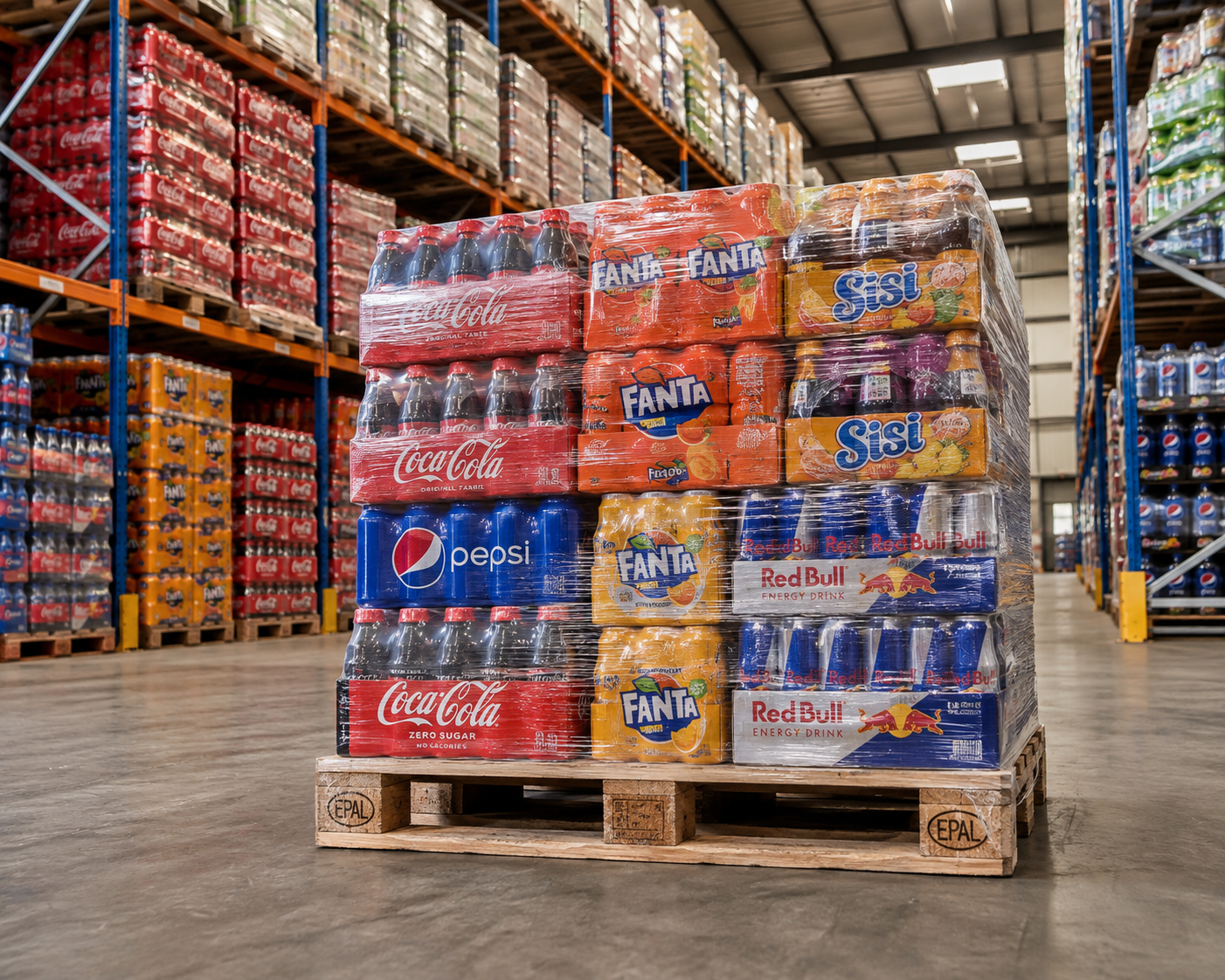
Combining soft drinks on a single pallet gives you immediate greater control over your stock, margin and customer satisfaction. Instead of separate orders per brand, you can strategically bundle various soft drinks, energy drinks and fruit juices. This way you maximise your order value and make full use of the available pallet space.
This method of purchasing fits perfectly with the commercial reality of hospitality, retail and vending. You gain access to A-brands such as Coca-Cola, Fanta and Sprite, combined with niche brands that strengthen your range. What's more, you benefit from faster delivery and better stock availability.
In this article we cover what combining soft drinks per pallet involves, why this purchasing method remains popular, how to compose pallets wisely, and which mistakes you can avoid.
WHAT IS COMBINING SOFT DRINKS PER PALLET?
When combining soft drinks per pallet, you make up one complete pallet with various brands and products. The minimum order quantity is one full pallet, but it is not necessary for this to consist of a single brand or type. You can therefore place Coca-Cola, Fanta, energy drinks and fruit juices on the same pallet.
This purchasing method arose from customer demand. Buyers increasingly ask for mixed trays with multiple flavours and mixed pallets with different trays. Specifically for hospitality and retail, this means you no longer have to order per brand, but receive your entire drinks range in one go.
The pallets meet logistics standards and are robust for handling and storage. You gain access to fast-selling soft drinks, energy drinks and fruit juices from trusted brands, in formats that suit your business. Typical products include classic carbonated drinks in 330 ml cans, 500 ml PET bottles, 1 litre and 1.5 litre packaging.
For hospitality businesses, office facilities and vending companies, this offers flexibility in stock management. You replenish stock without over-dimensioning any single product.
WHY COMBINING SOFT DRINKS PER PALLET REMAINS POPULAR IN 2026
Demand for varied soft drink ranges is rising. In hospitality, soft drinks make up 53% of all drink choices, with guests increasingly choosing sugar-free varieties and functional alternatives. This consumer movement compels you as a buyer to keep multiple flavours, formats and brands available at the same time.
Technological developments make mixed pallets easier. Coca-Cola introduced the Repackline in Dongen, with which various soft drinks are fully automatically packed onto a single pallet. Full, half and quarter pallets with multiple flavours mixed together are now possible as standard. This flexibility fits with your commercial reality.
Cost advantage remains the most important driver. Through smart purchasing of current batches, you benefit from 30 to 50% below market price. Tray purchasing delivers lower prices per can, less handling and more efficient stock management. On large volumes, every euro per tray makes an enormous difference to your final margin.
At the same time, you avoid overstocking individual products. You compose pallets on the basis of actual sales patterns, so that capital is not tied up in slow-moving stock. This combination of cost control, range flexibility and technological possibilities explains why pallet combining remains structurally embedded in professional drinks purchasing.
HOW BUSINESSES USE SOFT DRINK COMBINING WISELY
Hospitality businesses use pallet combinations to switch quickly during demand peaks. A grand café orders extra kegs of Heineken and trays of Red Bull for a festival weekend, with delivery before Friday afternoon. This flexibility prevents lost revenue during busy periods and keeps capital free for operational costs.
Retail benefits from promotional offers on A-brands. A convenience store combines a pallet of Fernandes with energy cans, delivered within 48 hours. Independent supermarkets use mixed pallets for leaflet promotions without a fixed stock investment. The short lead time and sharp purchase prices improve the margin directly.
Event organisers order large volumes tailored to location and timing. A festival organisation takes 10 pallets of water and 5 pallets of beer for a three-day event. This logistical coordination eliminates transport costs and waste.
Wholesalers temporarily top up their range with bulk deals. A regional wholesaler buys in coffee and energy drinks for seasonal promotions, available directly from stock. This system offers range flexibility without long-term commitments.
In addition, hospitality venues increase their margin through post-mix systems. A post-mix pack of 10 litres of syrup produces 60 litres of soft drink at a ratio of 1 to 5. This substantially lowers the cost price per glass compared with bottles and cans.
COMMON MISTAKES WHEN COMBINING PALLETS
Unclear communication about delivery times costs you customers and margin. Pallets that are transferred multiple times cause damage to crates and cans. Without active follow-up of your shipment, delays arise, especially with mixed pallets involving different weights and formats.
Damage usually arises through multiple transhipment moments. By transferring pallets as little as possible and packaging them well, you considerably reduce this risk. Problems with irregular pallet formats lead to extra handling and damaged packaging.
Many buyers have no advance insight into pallet transport costs. This lack of clarity results in unexpected expenses that disrupt your calculation. Inefficient route planning causes delays and higher transport costs.
A pallet can look tidy but still lack sufficient cohesion. Weight inequality between different soft drink brands disrupts stability during transport. Bends, vibrations and changing temperatures test every pallet combination.
More packaging material does not automatically mean more stability. The effectiveness depends on how boxes are interlocked and whether the weight is evenly distributed. When product formats or customer requirements change, pallet packaging that has worked for years can suddenly cause problems.
These mistakes have a major impact: damaged goods, delivery delays and dissatisfied customers. In addition, they often lead to extra costs that were not visible in advance.
CONCLUSION
Combining soft drinks per pallet offers you immediate advantages: lower purchasing costs, faster delivery and complete control over your range. By strategically bundling A-brands with niche products, you maximise your margin without tying up capital in slow-moving stock. Avoid common mistakes such as unclear communication and inefficient pallet build-up. When you apply this purchasing method wisely, you strengthen your competitive position and respond better to changing customer demand.