
A-brands, competitive prices
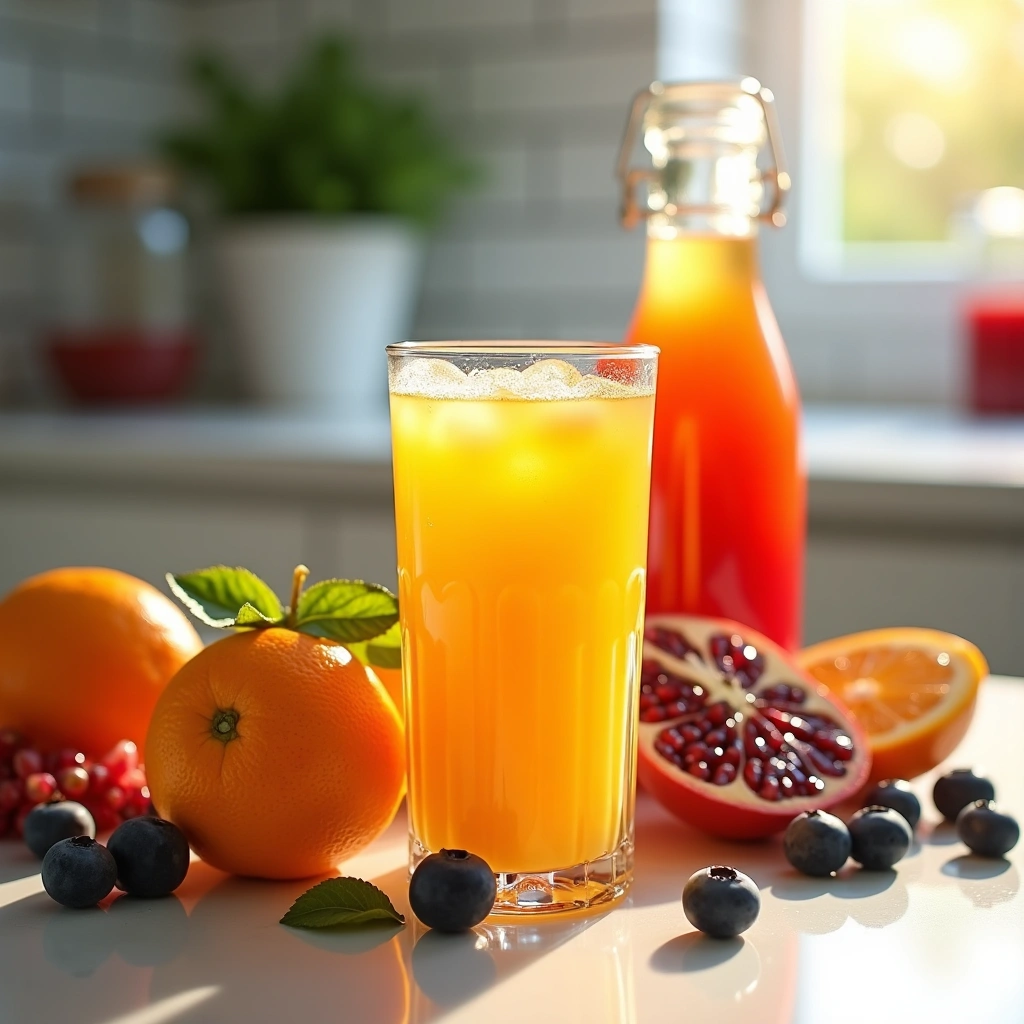
Did you know that a single glass of orange juice can easily contain more than 20 grams of sugar? That's just as much as a glass of cola. For hospitality entrepreneurs positioning fruit juices as a healthy choice in their range, this is an important fact. Buying healthy juices means more than simply choosing a product with fruit pictured on the packaging.
The healthiest variants are those without added sugars and with minimal processing, such as fresh orange juice or pomegranate juice. Vegetable-fruit juices also score highly because they naturally contain less sugar. As a buyer, this is where you can really make a difference for your customers.
In this article, we cover what natural fruit juices are, why they remain popular, how to use them cleverly in your range and which mistakes you can avoid when purchasing.
WHAT ARE NATURAL FRUIT JUICES?
To be sold as fruit juice in the Netherlands, a product must meet legal requirements. Fruit juices consist of 100% pure juice from one or more fruits and contain no added sugars, sweeteners or preservatives. Always a natural product, then, although the production method differs from brand to brand.
There are three ways in which fruit juices are produced: from concentrate, not from concentrate (NFC), or freshly pressed. With juice from concentrate, some of the water is removed after pressing in a vacuum evaporation unit at 25°C, reducing the volume by up to ten times. At the final destination, the same amount of water is added back, which makes transport considerably cheaper. NFC juices are transported frozen without water removal and then bottled. Freshly pressed juices are pressed locally and keep for only a few days, meaning refrigeration is essential.
In the Netherlands, apple juices, orange juices and multi-fruit juices are the most popular. Your customers can choose between chilled or unchilled variants and fresh or long-life juices. Alongside fruit juices, there is also fruit nectar, where part of the content consists of other ingredients. For business buyers, this means deciding in advance which shelf life, storage method and price bracket best suit your range.
WHY NATURAL FRUIT JUICES REMAIN POPULAR IN 2026
Pure fruit juices have been on a clearly positive trend since the pandemic. Consumers are increasingly putting health first and actively seeking out quality and healthy drinks. This has a direct impact on your range. Organic juices are also attracting growing interest from mainstream retail, as buyers shop more consciously and specifically seek out organic alternatives.
The figures support this shift. Sales of healthy ready meals rose by 63% between 2019 and 2025. At the same time, demand for vegetable juices grew by 67%, while smoothies showed an increase of 52%. Juices not made from concentrate are developing favourably. This market therefore offers concrete opportunities for hospitality entrepreneurs wanting to offer premium products.
Consumers are watching their spending closely but are still investing in personal health. Specifically, 54% pay more attention to calories in soft drinks than they did two years ago. The clean label movement reinforces this further: 75% of consumers worldwide pay more for products without artificial additives. Transparency about origin and ingredients plays a major role here. In this way, clear product information becomes not just a legal obligation but also a commercial advantage. When you provide your customers with clear information, you can be sure they will keep coming back.
HOW COMPANIES USE NATURAL FRUIT JUICES CLEVERLY
Natural fruit juices suit far more sectors than you might expect. Hotels consume up to 150 litres a week, while care institutions use pure juices without artificial additives because patients appreciate vitamin-rich products. Sports canteens are still missing opportunities, as only a small percentage stock fruit juice in their range. That is precisely where interesting possibilities lie for you as a buyer.
Modern preservation techniques are also making fresh juice commercially viable. HPP technology produces unpasteurised fresh juice with a forty-day shelf life in the fridge. Smart Ice technology freezes juice homogeneously for a two-year shelf life, tasting just as nutritious and fresh after thawing as on the first day. Micro-pulse treatment extends shelf life to two weeks without altering taste, texture or colour. In this way, fresh juice also becomes a practical choice for larger buyers.
At the start of 2024, the consumption tax on fruit juices rose from 9 cents to 26 cents per litre. This caused a 6% drop in turnover in the first nine months of 2024. Sports canteens must pass on this cost in selling prices of between €2.50 and €3.50 per glass or bottle. But through premium positioning, fresh juice remains attractive, even with a higher tax burden.
And what about presentation? Specialist shops use matt black furniture and oak logo boards for a clear product display. Vending machines for fresh orange juice perform excellently in schools, offices and gyms. This makes selling fruit juice considerably more interesting for you—and especially for your customers.
VARIANTS, PACKAGING AND APPLICATIONS
Organic juices form a growing category. Fruit from certified growers is cultivated without artificial growth agents, and SKAL certification guarantees the reliability of these products. The better fruit structure also makes pressing easier. Cold-pressed variants retain vitamins, minerals and enzymes optimally because no heat is generated during production. In this way, you can offer your customers a product that is both pure and nutritious.
Packaging formats for bottles range from 185 ml to 1 litre. For larger volumes, Bag-in-Box solutions are excellently suited. This packaging protects the juice against light and oxidation, giving it an unopened shelf life of 6 months to 1 year. Once opened, the juice stays fresh for several weeks thanks to the Vitop tap and oxygen-barrier films. There is therefore always a packaging format to suit your sales volume and storage capacity.
Orange juice holds the leading position worldwide as the most-consumed juice. And what about popular combinations such as orange-strawberry, melon-pineapple, strawberry-banana and mango-passionfruit? Vegetable-fruit juices such as carrot-apple or beetroot juice provide less sugar and more nutrients. In this way, you can offer the right product for every taste, variant and target group.
For hospitality businesses, mocktails such as blueberry-lime or pomegranate-apple-rhubarb offer refreshing alcohol-free alternatives. Combinations of pure juices with syrups, herbs and sparkling water tap directly into this trend. When you can surprise your customers with these kinds of creative options, you can be sure they will keep coming back.
COMMON MISTAKES IN PURCHASING AND SELLING
Not everything sold as juice is actually juice. Retail webshops regularly make mistakes here. Jumbo, for example, offered a drink under "unchilled juice" containing just 0.01% pomegranate juice and 0.01% açaí. Foodwatch filed a complaint about this because "juice" is a legally protected term for products containing 100% fruit juice. Albert Heijn and Plus amended their webshops following this complaint. But such mistakes cost you customer trust directly when your range is unclearly labelled.
And what about packaging featuring large pieces of fruit when only 1% of that fruit is actually present? This is legally permitted but misleading. For your purchasing, this means always checking product specifications carefully before presenting them to your customers as healthy juices.
Stock management forms a second pitfall. Excel remains vulnerable and error-prone as a range grows. Without links to sales channels, you miss real-time insight, causing stockouts or duplicate orders. Too much safety stock ties up capital unnecessarily, while too little insight into turnover rate means you are managing by gut feeling rather than data.
Reliable planning depends on clear communication with your suppliers about lead times and capacity. Regular evaluations ensure your planning stays aligned with actual market demand. This way, you keep control of your range and prevent unnecessary losses.
CONCLUSION
Natural fruit juices remain a valuable category for your range. Especially when you choose 100% pure variants without artificial additives and base your purchasing on clear product specifications.
Always check what you are buying. Not every package with fruit on it actually contains juice. This protects both your customers and your own reputation.
Tap into the growing demand for organic and cold-pressed options, but factor the higher excise duties into your pricing. You will still be left with an attractive margin.
By putting transparency and quality first, you position yourself as a reliable partner for health-conscious customers. Customers notice this immediately. And customers who trust you keep coming back.