
A-brands, competitive prices
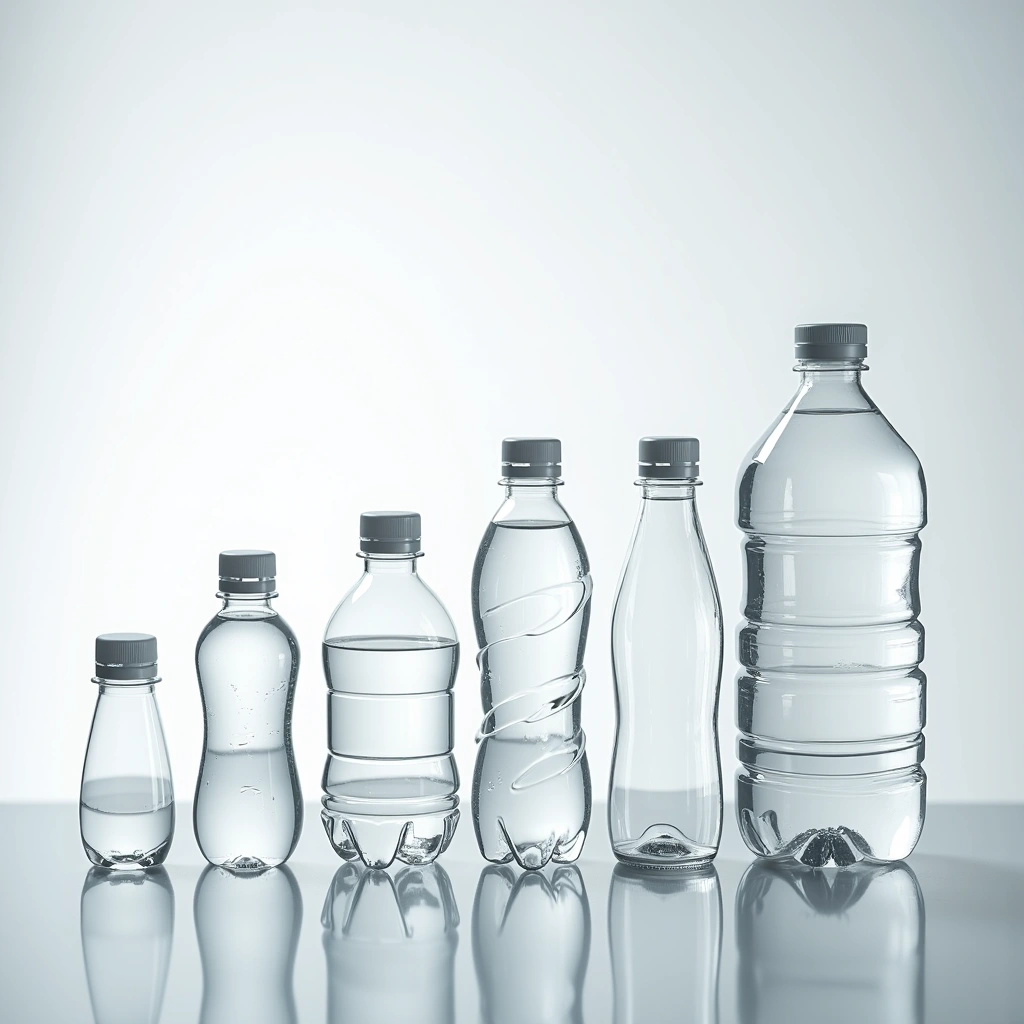
Everything You Need to Know About Formats and Shapes
PET Bottle Sizes
PET bottle sizes determine your beverage range in hospitality and retail. PET bottles have existed since 1973 and have grown into the standard for soft drinks, water, and other beverages. Not without reason: each format has its own application and its own business advantages.
In the Netherlands, 95 percent of PET bottles are now deposit bottles. That makes choosing the right size extra important for your margin and logistics. Because choosing the right size means not only satisfied customers, but also more efficient inventory storage and a better turnover rate.
From compact 250ml bottles for on-the-go to practical 2-liter bottles for home consumption: the difference is in the details. In this article you'll read everything about available PET bottle sizes and how to use them smartly for your business.
WHAT ARE PET BOTTLE SIZES AND WHY ARE THEY IMPORTANT?
PET bottles are made from polyethylene terephthalate, a plastic that combines strength with recyclable properties. That combination makes PET bottles highly suitable for soft drinks, water, and food products, without BPA risks.
The range of PET bottle sizes is broader than many companies think. The range extends from compact 25ml samples to 2-liter family packs. Standard volumes such as 250ml, 500ml, and 1000ml dominate hospitality because they align with common consumption moments. And what about more specialized formats such as 125ml for testers, 330ml for individual portions, and 750ml for premium juice products? These offer extra flexibility in your range.
Then there's neck size, a technical detail that directly affects your packaging process. Common specifications such as 24-410 or 28-410 ensure uniform sealing. Wider 38mm openings make it easier to fill thicker liquids such as smoothies. This is how neck size determines which caps and closures you can use.
For your business, choosing the right PET bottle sizes means better margins. Smaller bottles generate higher revenue per liter, larger formats lower your packaging costs per unit. This way you can serve specific customer segments with different sizes: 250ml for on-the-go, 500ml for hospitality terraces, and 1000ml for family purchases.
WHY PET BOTTLE SIZES REMAIN POPULAR IN 2026
New European regulations such as CSRD and Scope 3 require companies to map the CO2 footprint of their products. PET bottles generally have a lower CO2 emission than glass, further increasing their popularity among manufacturers. Specifically from 2026, PET bottles must consist of at least 25% recycled plastic according to EU legislation. That significantly stimulates demand for R-PET.
The unbreakability of PET delivers direct cost savings for your business. No breakage in production spaces, less shrinkage in stores when products fall. And what about online sales? PET doesn't break during shipping via parcel services or supermarket delivery. This prevents shrinkage on one of the fastest-growing sales channels.
The deposit system ensures that used PET material returns to the chain for new PET bottles. Manufacturers now process various percentages of recycled PET according to customer wishes, ranging from 0%, 30% to 100% R-PET. New bottle designs also require 20% less material without compromising on strength. This way, PET becomes increasingly efficient, both for the producer and for your business.
The weight difference speaks for itself. A standard 500ml PET bottle weighs 20 to 28 grams, while glass weighs 250 to 350 grams. That makes a significant difference in transport costs and CO2 emissions per shipment. For hospitality and retail, this means lower purchasing costs and much more efficient inventory logistics.
HOW COMPANIES SMARTLY USE PET BOTTLE SIZES
Supermarkets are increasingly filling fresh orange juice in PET bottles, because customers prefer transparent packaging for juice products. The size choice is directly linked to the consumption moment. 250ml works excellently for small portions, 330ml serves the larger individual need, and 500ml is just right for two people. Family consumption calls for different choices: 1000ml for about four portions or 2000ml formats that cover eight servings. This way, each size fits a specific moment and a specific target group.
And what about festivals, sporting events, and trade fairs? They consume large quantities of PET bottles for beverage sales to visitors. Offices and sports venues use 33 to 50cl as the Dutch standard for their vending machines and refrigerators. Wholesalers also benefit from volume discounts on bulk purchases, which significantly lowers the purchase price per unit. This way, buying in the right sizes also becomes directly more interesting for your margin.
FrieslandCampina switched to 100% recycled PET bottles, thereby preventing the production of 1.9 million kilograms of new plastic. This illustrates how dairy companies use PET bottles for sustainability goals without compromising on product quality. Smoothies, milk, and sauces all find their way to consumer markets via various PET bottle sizes. Retailers combine small 250ml bottles for impulse purchases with 1 to 2 liter formats for value-oriented family purchases. This way you serve every customer segment with exactly the right format.
OVERVIEW OF PET BOTTLE SIZES AND APPLICATIONS
The range of PET bottles is broader than many companies think. Mini bottles from 20ml to 75ml are ideal for samples and promotional purposes. Samples and testers mainly use 100ml to 150ml formats. For cosmetics and lotions, 200ml and 250ml PET bottles are common.
The beverage industry uses broader ranges. Smoothies and shakes reach consumers via 150ml to 1000ml juice bottles. Standard volumes such as 300ml, 330ml, 400ml, and 750ml serve their own market segments. Larger formats range from 1500ml to 2000ml for family use. This way you can use the right format for every consumption moment.
And what about the choice of shape? PET bottles are available in round, oval, rectangular, and square designs. Square and rectangular models save pallet space during transport, while round bottles are the standard for beverage vending machines. Neck sizes vary from 24/410 and 28/410 for cosmetics to wider 38mm, 42mm, and 50mm openings for industrial liquids. This way, each bottle fits the specific requirements of your product and packaging line.
Color also plays a role. Transparent bottles show the contents directly, brown versions protect light-sensitive products. In addition, white, green, blue, and pink variants are found in retail. Color is thus not only aesthetic but also functional.
Pharmaceutical applications require specific square PET bottles for culture media, serums, and reagents. Cleaning products, oils, and chemical products use HDPE alongside PET formats up to 5000ml. In short, the range is more versatile than you might expect.
COMMON MISTAKES WHEN CHOOSING PET BOTTLE SIZES
Many companies choose PET bottle sizes "to be safe" on the large side. That sounds cautious, but it costs you money. Customers making impulse purchases more often reach for smaller portions. A hospitality venue that only stocks 1-liter bottles for terrace sales misses revenue because visitors expect 330ml or 500ml for a one-time consumption.
A second pitfall is selecting PET bottle sizes without insight into actual consumption patterns. When you do that, inventory piles up or shortages arise at the wrong times. Festivals that only stock 500ml while visitors mainly grab 250ml on the go miss out on sales opportunities. It's that simple.
Additionally, buyers often look at individual products instead of the total range. That's a shame. A complete range from 250ml to 2 liters serves different customer segments better than focusing on just one format. Retailers who combine multiple PET bottle sizes increase their total sales volume because every target group finds its preferred size.
And what about order quantities? Wholesalers who order too small volumes miss out on volume discounts, while orders that are too large tie up capital in slow-rotating inventory. You lose margin on both sides. It therefore pays to properly map your consumption patterns before making a choice.
CONCLUSION
Choosing the right PET bottle sizes has a direct impact on your margin, your inventory logistics, and your customer satisfaction. You'll notice this as soon as you align your range with actual consumption patterns instead of standard choices.
Combine different formats to serve every customer segment. From 250ml for impulse purchases to 2 liters for family consumption: every target group has its preferred size. When you respond to this smartly, you increase your turnover rate and lower your purchasing costs per unit. This makes selling beverages in PET bottles much more interesting for you, but especially for your customers.
You decide for yourself which formats you use, but practice shows that a complete range always yields more than focusing on just one size. You can really build on that combination.