
A-brands, competitive prices
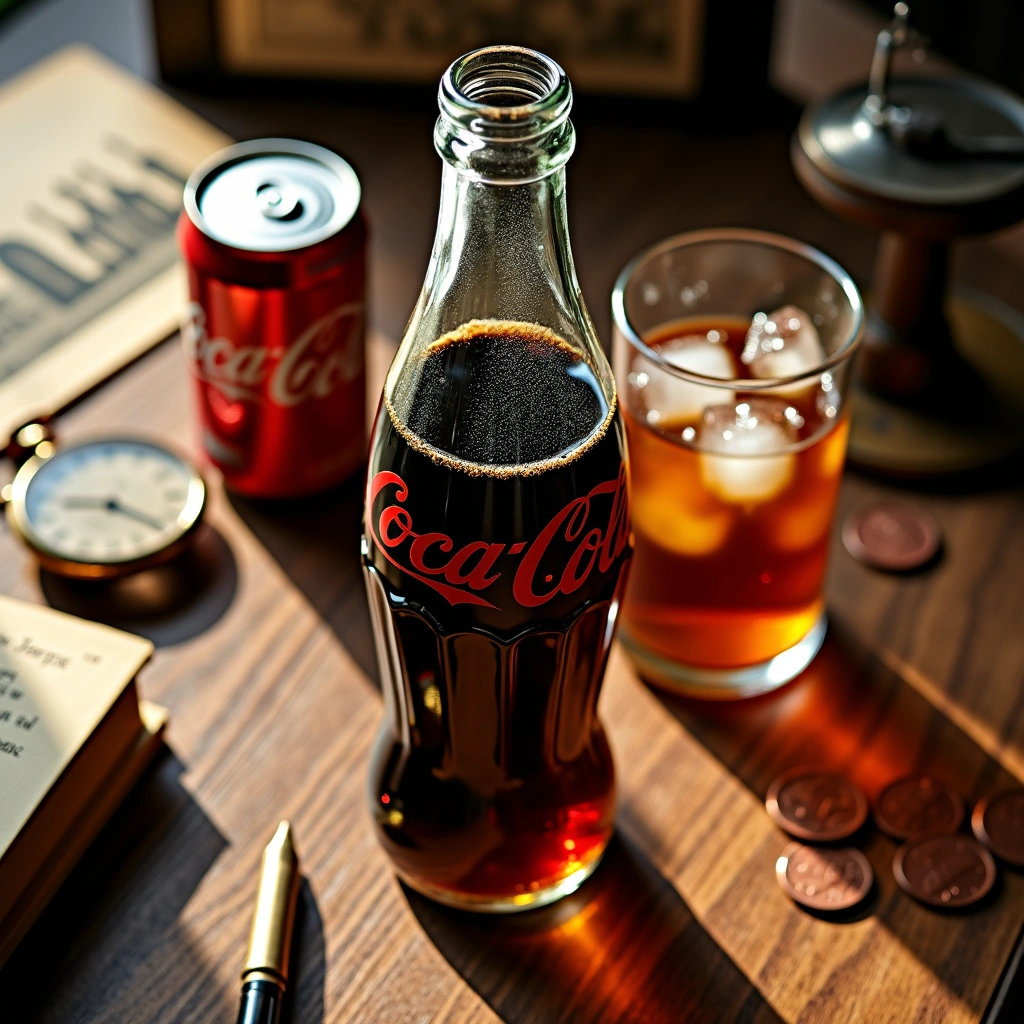
The History of Coca-Cola
The history of Coca-Cola began in 1886 as a medicine for dizziness, developed by pharmacist John Pemberton from Atlanta. A glass cost five cents at the time. Today, the brand is available in almost every country in the world and forms a crucial revenue pillar for hospitality and retail.
The history of Coca-Cola shows how a local drink grew into the most recognisable soft drink brand worldwide. As a hospitality entrepreneur or retailer, it is valuable to understand why Coca-Cola continues to be so successful. That understanding translates directly into better choices in your purchasing and sales strategy. In this article, you will discover the key milestones, sales strategies and practical purchasing tips to get maximum return from this A-brand.
What is Coca-Cola and where does it come from?
Coca-Cola originated from experiments that pharmacist John Pemberton carried out with plant extracts in his home in Columbus around 1880. Pemberton initially developed Pemberton's French Wine Coca, an alcoholic drink containing coca extract. When Atlanta introduced a ban on alcohol in 1886, he adapted the recipe by replacing the wine with sugar syrup and adding caffeine-containing kola nuts. An emergency solution that grew into a world icon.
On 8 May 1886, he served his new syrup for the first time at Jacob's Pharmacy in Atlanta. An employee mixed the syrup with sparkling water, creating the distinctive fizzy drink. In this way, a pharmacist's recipe became the basis of the best-selling soft drink brand in the world.
Pemberton's bookkeeper, Frank M. Robinson, played an indispensable role in this. Robinson came up with the name Coca-Cola because he thought the two Cs would look good in advertising. He also designed the logo in the then-popular Spencerian script, an elegant style of handwriting common at the time. Robinson wrote the name in his ledger, thereby creating the famous logo that is still recognisable today.
And what about the power that logo has built up since then? It has remained virtually unchanged since 1886. That says everything about the value of well-considered brand design. For retailers, that recognisability translates directly into a product that needs no introduction.
The history of Coca-Cola: from local product to global brand
Businessman Asa Candler bought the company in 1888 for $2,300 and founded The Coca-Cola Company in 1892. His marketing approach ensured that Coca-Cola was available in almost every American state by around 1895. A textbook example of what consistent brand rollout can achieve.
The Netherlands first encountered Coca-Cola during the 1928 Olympic Games in Amsterdam. The first point of sale was a simple stall on the grounds of the Olympic Stadium. Two years later, in 1930, the N.V. Nederlandsche Coca-Cola Maatschappij was founded. This gave Coca-Cola's history in the Netherlands its official foundation.
The real test came during the Cola Wars of the 1980s. Pepsi gained ground with blind taste tests and celebrities such as Michael Jackson. Coca-Cola responded in 1985 with New Coke, a sweeter variant following taste tests with almost 200,000 consumers. It was a disaster. Consumers rang the call centre in tears. Psychologists heard reactions as though a family member had died. The company received 40,000 complaint letters. And what about a brand that pushes its own customers that far?
After 79 days, the original formula returned as Coca-Cola Classic. Market share eventually rose to 40%, against 31% for Pepsi. This episode shows just how deep brand loyalty can run. Today, Coca-Cola reaches more than 200 countries, with 2.1 billion drinks consumed daily. For you as a retailer or hospitality entrepreneur, that is not just a trivia fact. It is proof that this brand sells itself.
Why Coca-Cola remains popular in 2026
Coca-Cola scores higher in neural reward centres than competitors, even when the taste is identical. That is no coincidence. Years of association with positive emotions in advertising campaigns have created a psychological advantage that few brands can match. The result? A product that sells itself through brand recognition alone.
Strategic sponsorship further strengthens that position. Coca-Cola has supported the ESSENCE Festival for 30 years, which generated almost €0.95 billion in economic impact between 2022 and 2024. In 2024 alone, the festival provided a local economic boost of €330.44 million. Tomorrowland has also enjoyed a Coca-Cola partnership for 15 years, reaching 400,000 festival-goers. In this way, the brand creates purchasing impulses that feed directly through to your point of sale. When consumers associate Coca-Cola with experience, they will also come looking for the brand at your premises.
Sustainability plays an increasingly important role in this. Since mid-2021, all plastic bottles have been made from 100% recycled material, saving 10,000 tonnes of new plastic. In addition, Coca-Cola hit its target of 50% sugar-free sales volume in 2022, with a current low-calorie share of 44%. The company is also investing 75% of its marketing budget in light and zero variants. In this way, Coca-Cola aligns with what your customers are asking for today and protects your category revenue against health criticism. That is a strong foundation for you as a retailer or hospitality entrepreneur to build on.
How retailers use Coca-Cola cleverly
As category captain, Coca-Cola European Partners Netherlands takes an active role in shelf management. The focus is on positioning Coca-Cola Zero Sugar as a beacon at the start of the aisle, encouraging shoppers to choose sugar-free variants more often. In this way, this approach boosts sales without sugary variants disappearing from view.
Placement outside the fixed soft drinks shelf significantly increases your turnover. Soft drinks are increasingly appearing near the bread section, at the till and alongside meal inspiration. That is no coincidence. With 70% of households consisting of one or two people, retailers are cleverly tapping into spontaneous purchases for immediate consumption. Think of a Fuze Tea at lunch or a sparkling drink with dinner. When you surprise your customers at the right moment, you can be sure they will keep coming back.
For hospitality businesses, Coca-Cola offers brand ambassadors who train your staff, set up exclusive deals and organise promotions. With Share a Coke campaigns, outlets receive personalised crates featuring their company name and eye-catching point-of-sale material. And what about premium mixers such as Royal Bliss and Coca-Cola Signature Mixers? These cater precisely to the niche market you want to reach.
Coca-Cola also works with VendingatWork at more than 3,000 locations across the Netherlands. Sugar-free drinks form an increasingly large part of the portfolio due to growing demand. Local marketing activities around vending machines add extra life to the range. This makes selling Coca-Cola considerably more interesting for you—and especially for your customers.
Variants, packaging and applications of Coca-Cola
Coca-Cola's range is broad. Coca-Cola Original Taste still runs on the unchanged 1886 recipe, supplemented with flavour extensions such as Cherry, Vanilla and Lemon. Coca-Cola Zero Sugar has grown since its 2005 launch into the most popular sugar-free variant, with reformulations in 2016 and 2021 to get even closer to the original taste. In 2024, 30% of global volume already consisted of low- or no-calorie drinks. So whatever the flavour, format or variant, you can find it with this brand.
Packaging formats align closely with your sales channel. Almost half of all sparkling drinks are sold in formats of 250 ml or smaller. Coca-Cola Zero Caffeine Zero Sugar has been available since March 2026 in 330 ml cans and 500 ml PET bottles, aimed specifically at cinemas and petrol stations. And what about the new Zero Sugar Lime in a handy 250 ml can format? These are precisely the formats that tap into impulse purchases and immediate consumption, allowing you to generate more revenue per customer.
Sustainable packaging is no longer an afterthought. All plastic bottles are made from 100% recycled material. The LitePac Top cardboard multipack replaces shrink wrap and saves 200 tonnes of plastic per year. This aligns directly with growing consumer demand for responsible choices and protects your range against health criticism.
For hospitality businesses, Coca-Cola also offers versatile options for the drinks menu. Classic cocktails such as the Kalimotxo and the Batanga significantly boost your margin. Mocktails such as the Roy Rogers cater attractively to non-drinking guests. In this way, Coca-Cola becomes not just a soft drink product, but a fully-fledged revenue driver within your hospitality offering.
Common mistakes in selling and purchasing Coca-Cola
Stock shortages during peak periods cost you revenue directly. Coca-Cola previously experienced a distribution crisis in which supermarkets and snack bars found empty shelves due to problems with a new system at the factory in Dongen.