
A-brands, competitive prices
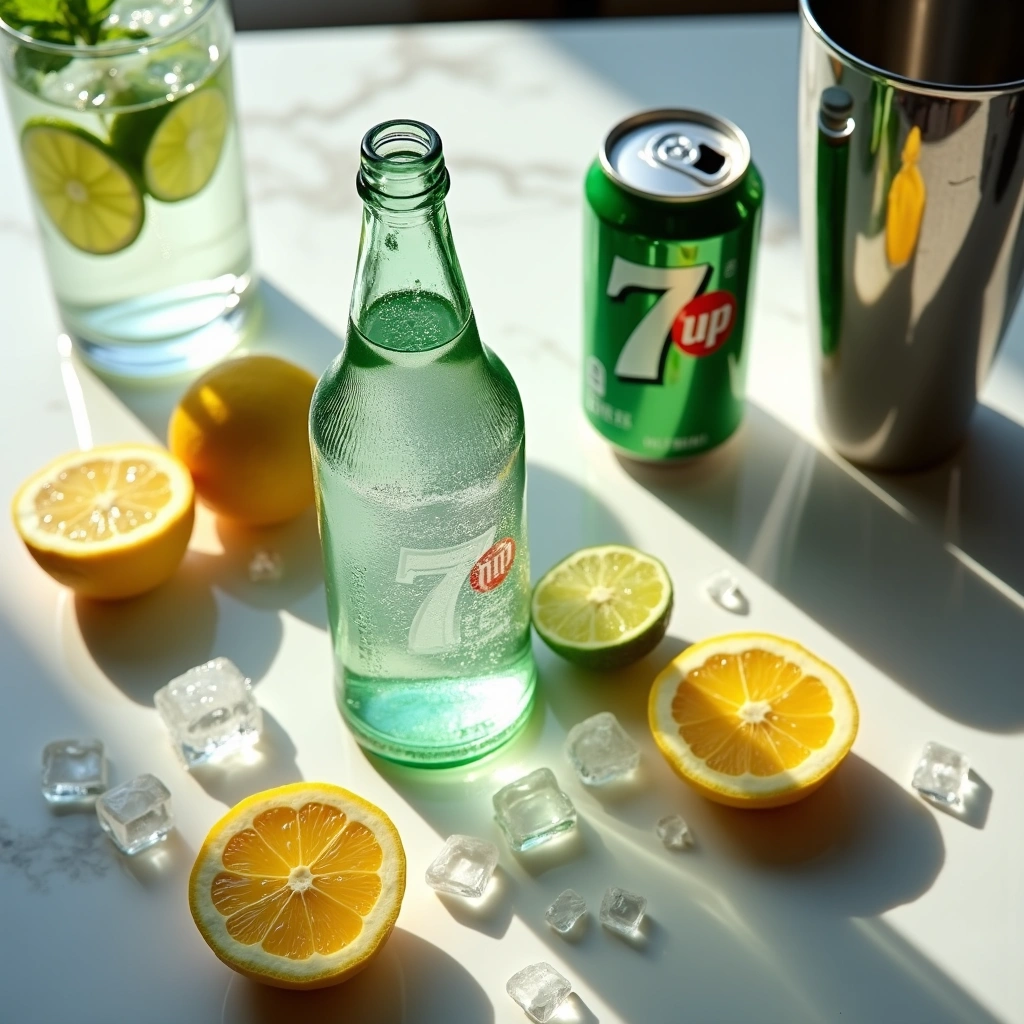
From Medicine to Iconic Soft Drink
The Surprising History of 7UP
Few soft drinks have as unusual an origin as 7UP. The drink was launched in 1929 as a medicine for depression, under the name 'Bib-Label Lithiated Lemon-Lime Soda'. It contained lithium citrate, a substance used at the time in the treatment of mental health disorders. In 1948, the American Food and Drug Administration banned this ingredient. Today, 7UP is a colourless soft drink with a lemon-lime flavour, sold in more than 130 countries.
For hospitality and retail, 7UP remains an interesting choice. Its recognisable taste, wide availability and strong brand awareness make it a reliable option for your range. In this article, you'll read all about the evolution of 7UP and how to make the most of this soft drink for your customers.
WHAT IS 7UP?
Charles Leiper Grigg launched 7UP in October 1929 from St. Louis, Missouri. He was no stranger to the industry. He had previously developed 'Whistle', an orange drink for the Vess Soda Company, and later 'Howdy', also an orange soda. With 7UP, Grigg took a different direction, and with success.
Grigg never officially explained where the name '7UP' came from. And what about the theories that have sprung up around it? Some claim the '7' refers to the seven original ingredients, others link it to lithium's atomic number. Still others point to the original bottle size of 7 ounces. The myth that it refers to a pH value of 7 is, in any case, incorrect: 7UP has a pH of around 3.79.
Today, 7UP is a colourless carbonated soft drink with a lemon-lime flavour. In the United States, the brand belongs to Dr Pepper Snapple Group, while PepsiCo distributes it in the rest of the world. These two major distribution channels ensure reliable availability worldwide. The caffeine-free formula makes 7UP suitable for a wide range of uses, from direct consumption to serving as the base for mixed drinks. This makes the brand appealing to a broad target audience.
WHY 7UP REMAINS POPULAR IN 2026
The lemon-lime soft drinks market is growing worldwide to EUR 11.83 billion by 2034, with annual growth of 4.2%. For hospitality and retail, this translates into stable, predictable demand for brands such as 7UP. But what exactly is driving this continued popularity?
Sugar-free variants play a major role in this. This category is growing by 6.3% per year, and in the Netherlands, 60% of soft drink volume now consists of sugar-free or low-calorie options. 7UP Zero Sugar cleverly responds to this, offering the same refreshing lemon-lime taste but without the sugar. This allows you to reach both the classic consumer and the health-conscious buyer with a single brand. That means greater customer satisfaction and a broader audience for your range.
Nostalgia is a second driving force behind 7UP's popularity. For many people, lemon-lime soft drinks were among the first soft drinks they ever tasted, thanks to the caffeine-free formula. That recognition drives sales time and again. The rebrand from March 2023 gave 7UP a fresher look while retaining the iconic green colour scheme. And the return of Fido Dido in 2019 once again strengthened the emotional bond with older generations.
In addition, 42% of consumers are willing to pay more for sustainable products. Sustainable packaging is growing by 8.1% per year. The availability of 7UP in various packaging formats fits well with this. With 7UP, you have a brand in hand that not only sells, but also meets what your customers expect today.
HOW COMPANIES USE 7UP CLEVERLY
7UP is a soft drink that lends itself excellently to a wide range of applications. Take vending machines: employees have direct access to a refreshing 7UP without leaving the workplace. You put together the range yourself and respond to seasonal preferences. Traditional 7UP alongside sugar-free variants in a single machine means you serve everyone. This boosts productivity because employees can take a quick, easy break.
And what about the possibilities as a mixer? 7UP is a versatile base ingredient for popular cocktails such as the Blue Lagoon, Lucky 7 and mojito. A Safari with 7UP goes down brilliantly at summer parties thanks to its mild, sweet taste. Serve ice-cold in a tall glass with a slice of lime for a polished presentation. The 20cl glass bottles give a premium feel and combine effortlessly with vodka or gin. When you surprise your guests this way, you can be sure they'll keep coming back.
For large-scale orders, the wholesaler supplies 7UP in full pallets and complete lorry-loads to hospitality buyers, festivals and retail chains. Each pallet is factory-sealed and ready to use immediately. Smaller packs boost sales because consumers prefer them over the larger formats of competing brands. Mini packs in fact sell better as a single product than as a multi-pack. This leaves you with an attractive margin.
VARIANTS, PACKAGING AND APPLICATIONS
7UP offers a range that caters to a wide variety of consumer preferences. The original 7UP delivers the classic carbonated lemon-lime taste. There's also 7UP Zero Sugar, free from sugar, colourings and caffeine. This sugar-free variant uses sweeteners such as aspartame and delivers the same refreshing taste without the calories. For a flavour twist, there's 7UP Zero Sugar Cherry, with a cherry flavour and no sugar.
And what about 7UP Mojito Free? This variant combines lemon, lime and mint without sugar, calories or alcohol. Available in 0.5- and 1.5-litre bottles, it's an excellent alcohol-free alternative for cocktail lovers. Regional flavours such as Tropical 7UP with pineapple and mango, Cherry 7UP and the distinctive Salted Lemon 7UP from Hong Kong are available on a limited basis through import channels. This allows you to enrich your range with flavours that genuinely surprise your customers.
Packaging formats vary by sales channel:
Mocktails offer an additional application that is steadily gaining popularity. Muddle fresh strawberries with 7UP for a summery mocktail. Add mint leaves, ice cubes and a slice of lime for an authentic mojito feel. For a less sweet variant, you can also partly replace 7UP with sparkling water. This way, 7UP becomes more than just a drink from the fridge — a versatile product that keeps surprising your customers.
COMMON MISTAKES OR CHALLENGES
Purchasing and distributing 7UP comes with challenges you need to bear in mind. Unexpected spikes in orders quickly lead to delays or shortages, especially during warm spells when demand rises sharply. Temperature-sensitive products also require constant monitoring and timely delivery. Stock buffers, flexible transport and working with reliable partners are practical solutions here. Analysing historical sales data helps you better estimate future demand.
Competition with Sprite is a constant factor. Internationally, Sprite holds an 8% market share, while 7UP remains stuck at 4%. In Europe and the United States, Sprite dominates, but 7UP performs significantly better in Asia. Taste tests regularly place 7UP behind Sprite, which affects consumer choice. This means that, as a retailer or hospitality operator, you need to think carefully about how you position 7UP within your range.
Administrative pressure is an underestimated bottleneck. A broad range with many suppliers takes up a lot of time. A lack of up-to-date stock insight makes planning more difficult. And promotions from drinks suppliers are often so complex that retailers ultimately don't benefit from them. These are matters best tackled sooner rather than later.
The sugar tax has also had a significant impact on soft drink prices, with increases of 9 to 26 cents per litre. From October 2023 to January 2024, soft drink prices rose by an average of 5%. These higher costs place additional financial pressure on soft drink brands and hospitality venues. Buying through the right channels therefore remains more important than ever.
CONCLUSION
7UP has come a long way, from a lithium-containing medicine to one of the most recognisable soft drinks in the world. This rich background, combined with a caffeine-free formula and a growing range of sugar-free variants, makes the brand suitable for a wide variety of customer groups.
As a hospitality or retail operator, you benefit from a brand that appeals to both classic and health-conscious consumers. Combine the original 7UP with 7UP Zero Sugar in your range and you'll instantly serve a broader audience. Also make sure you have sufficient stock during warm periods, as that's precisely when demand rises the most sharply.
Buying 7UP means choosing a brand with proven popularity and versatile applications. How you use it is up to you, but we're confident that 7UP is a valuable addition to your soft drinks range.