
A-brands, competitive prices
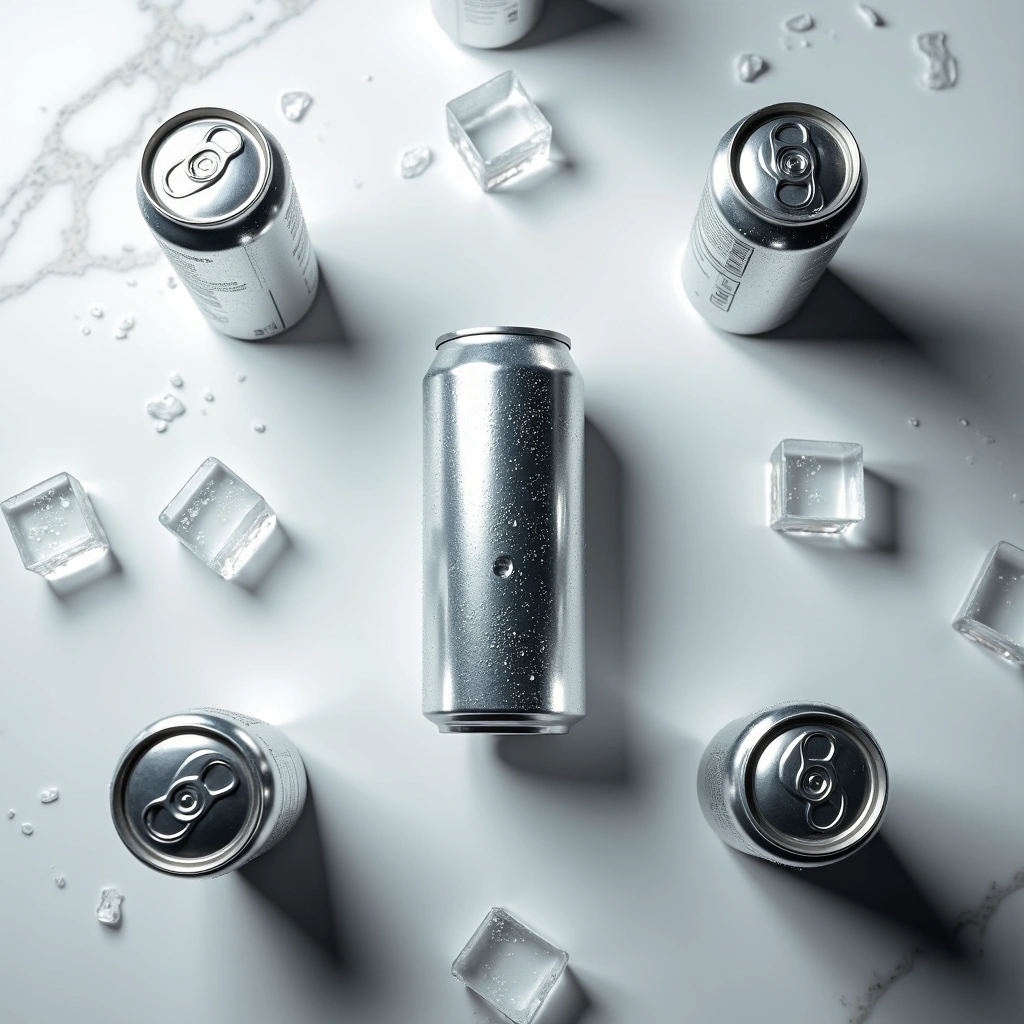
The 33cl can is the most common packaging size for soft drinks in the Netherlands, alongside 15, 25 and 50 centilitres. For hospitality and retail, however, this format is more than just a standard choice. According to Coca-Cola Netherlands, the 33cl cola can generates 12.8% more revenue in hospitality venues where both packaging types are available. What's more, the modern design saves as much as 620 tonnes of plastic.
The 33cl can format combines practical convenience with commercial advantage. But what exactly makes this format so successful? And why has the 33cl cola can remained the global standard for so many years? We take you through the history, the business benefits and the smart ways to use this iconic packaging for your company.
WHAT IS THE 33CL CAN AND WHY DOES IT MATTER?
A 33cl can measures an average of 115.5 mm in height with a diameter of 65 mm. For soft drinks such as a 33cl cola can, the diameter is usually 70 mm. This makes the 33cl can format particularly well suited to single-person use in hospitality and retail.
The 330 ml volume aligns seamlessly with the international concept of a standard drink. This format simplifies portion size for both alcoholic and non-alcoholic drinks. For your business, this means predictable stock planning and a uniform presentation that customers recognise and trust.
The 33cl can is, of course, not the only size. Alongside this basic format, there are also 25cl for energy drinks and 50cl for beer. AB InBev, for example, offers Jupiler in 25cl, 33cl, 35.5cl and 50cl, but emphasises that the 33cl can remains the standard. This variety gives you, as a buyer, the flexibility you need, while the basic format provides the reliability you can build on.
A standard volume also significantly simplifies production and packaging. Filling lines are easier to configure for standard sizes. Secondary packaging such as six-packs and pallet configurations are entirely based on these 33cl can dimensions. For wholesalers and retailers, this translates directly into more efficient logistics and lower storage costs.
Consumers expect this format, retailers keep it in stock as standard, and hospitality venues serve it as the obvious choice. That is how strong this format's position is in the market.
THE HISTORY: HOW 33CL BECAME THE GLOBAL STANDARD
It did not start out as a success. The American Can Company was already experimenting with canned beer in 1909, but fundamental technical problems stood in the way of commercialisation. Soldered seams were not strong enough to withstand the pressure of carbonated drinks, and the metal spoiled the taste of the beer.
It was not until 1931–1933 that the American Can Company developed improved seams and a vinyl coating for the inside of the can. This breakthrough made everything possible. On 24 January 1935, the Gottfried Krueger Brewing Company launched the first commercial beer can in Richmond, Virginia. A test among 2,000 consumers showed that 91% approved of the product and 85% thought it tasted better than bottled beer. Within six months, the brewery was ordering 180,000 cans a day. The standard had been set.
Incidentally, the 330 ml volume did not originate with cans themselves. This size was already established for beer bottles, based on the American concept of a standard drink of 12 oz (355 ml). For metric countries, 330 ml became the logical international equivalent. When can technology became popular, manufacturers naturally adopted this existing standard size.
Coors then introduced the first aluminium can in 1959. And what about Ermal Fraze's 1966 invention: the pull-tab? The cumbersome business of opening cans with a piercer was thereby consigned to the past for good. Step by step, the 33cl can became what it still is today: the global standard.
WHY THE 33CL CAN REMAINS POPULAR IN 2026
Sustainability plays a major role in the lasting popularity of the 33cl can. The Netherlands achieved an 84% recycling rate for aluminium packaging in 2024, while 75% of all aluminium cans are recycled worldwide. A 33cl cola can returns as a new product within sixty days. Recycling aluminium also saves 95% of the energy compared with producing new material.
Aluminium's light weight offers direct business advantages. An aluminium 33cl can weighs roughly half as much as a steel equivalent. For your transport, this means 50% less CO2 emissions per load and more units within the maximum load weight per container. This keeps costs low, and you benefit directly.
The compact 33cl can format also optimises your storage and refrigeration. Cans are more compact than bottles of the same volume, meaning more products fit on your shelves. In addition, a 33cl cola can cools faster thanks to the thin metal. For hospitality businesses, this means more efficient use of refrigeration and better use of space.
Since 2011, sleeker 33cl variants have been taking over the market. This more elegant look suits smaller households and on-the-go consumption perfectly. Consumers strongly support the deposit return system, with 83% collection rates for cans with deposit. This combination of sustainability, practical convenience and broad consumer preference makes the 33cl can the preferred choice for your range.
HOW COMPANIES USE THE 33CL CAN CLEVERLY
Major producers are modernising the 33cl can with sleeker designs that deliver direct business benefits. Coca-Cola, Fanta, Fernandes, Minute Maid and Fuze Tea have switched to sleek cans. This taller, slimmer variant saves 620 tonnes of plastic through smaller trays. The volume remains 33cl, but the narrower diameter makes transport and storage more efficient.
For hospitality businesses, the sleek 33cl cola can offers even more advantages. It cools faster thanks to its streamlined shape, and its premium look fits perfectly with contemporary service concepts. Consumers perceive these slimmer cans as more refined. In this way, the packaging naturally drives sales.
Retailers benefit from better shelf utilisation. More 33cl cans fit into the same space, and the strong visual impact in fridges and on counters attracts customers. Companies can also load more units per pallet, which directly reduces transport costs.
And what about vending operators? Older machines require chute adjustments that can cost up to a thousand euros. Fortunately, spiral vending machines pose no problems, as they were already adapted for Red Bull and Chocomel. Where adjustment costs are high, operators consider refurbished machines with suitable chutes.
In this way, the switch to sleek cans combines environmental savings with commercial advantage for your business.
CONCLUSION
The 33cl can is no accidental standard. Rising from a rich history, this format has grown into the obvious choice for hospitality, retail and wholesale worldwide. The combination of commercial advantage, sustainability and practical convenience makes the 33cl cola can a format your business can build on.
We offer an extensive range of 33cl cans from both well-known A-brands and emerging soft drink brands. This means you can come to us for all variants and keep surprising your customers with the right offering.
You can always request a free, no-obligation quote. This way, you can see for yourself what advantage we can offer you. And you are not tied to anything, because that's how flexible we are too. You decide for yourself who you do business with, but we are confident we can offer you the best deal when it comes to soft drinks.