
A-brands, competitive prices
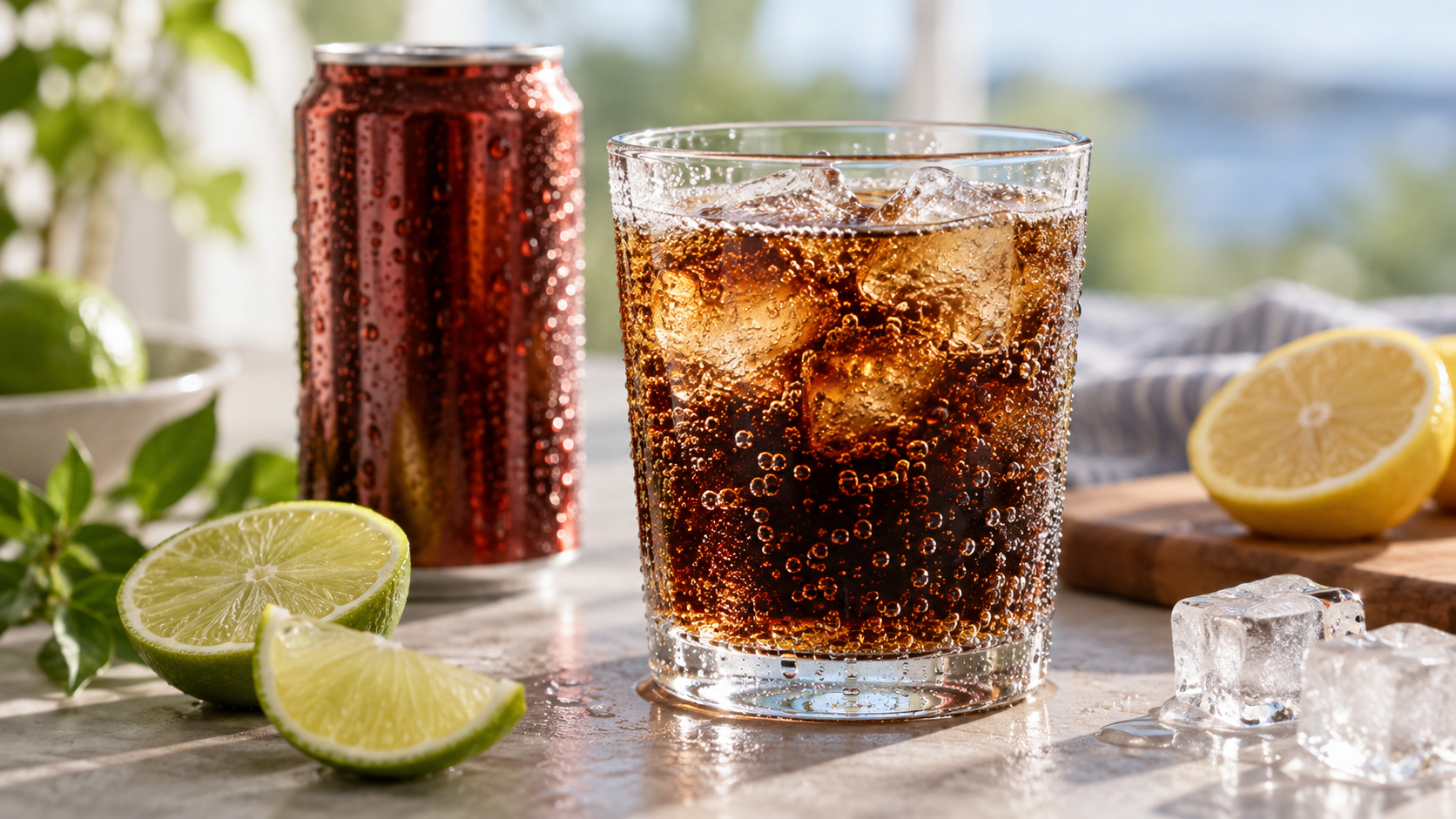
Ever since 1767, when scientist Joseph Priestley discovered how to saturate water with carbon dioxide, the beverage industry has never been the same. The characteristic tingle your customers enjoy comes from carbon dioxide (CO2) being dissolved in liquid under high pressure. For hospitality and retail, this is no minor detail: carbonated drinks remain as popular as ever and deliver attractive margins. Proper storage and presentation play a large part in customer satisfaction.
Here you can read exactly what carbon dioxide is, how it is produced and why it still plays a defining role in your range in 2026. You'll also get practical insights into purchasing, storing and selling carbonated soft drinks, so you can see for yourself where the opportunities lie.
WHAT IS CARBON DIOXIDE IN SOFT DRINKS?
The fizz in soft drinks comes from carbon dioxide (CO2) that is forced into the liquid under pressure during the carbonation process. As soon as CO2 comes into contact with water, carbonic acid (H2CO3) is formed. This chemical reaction produces the familiar bubbles and gives soft drinks a slightly acidic taste that balances out the sweetness.
The process works through an equilibrium between carbonic acid and carbon dioxide gas. In a closed bottle or can, the space above the liquid remains saturated with CO2. When you open the packaging, the pressure drops and this equilibrium is immediately disrupted. The carbonic acid then converts back into carbon dioxide gas, visible as rising bubbles. Shaking makes the carbonic acid unstable and increases the pressure even further. That's why a shaken bottle overflows the moment you open it.
Manufacturers choose from various methods to add CO2. A tank system brings liquid CO2 into contact with the drink, with gas exchange taking place at the interface. In-line mixers break gas bubbles down into smaller bubbles so they dissolve faster. And then there are injector systems that introduce CO2 at a molecular level; thanks to the large contact surface, this results in near-complete dissolution. Each method has its own advantages in terms of quality and efficiency.
Temperature plays a decisive role here: CO2 dissolves better in cold liquids. That's why manufacturers chill soft drinks during the carbonation process. As a result, you as a buyer get a product of higher quality with a longer shelf life.
WHY CARBONATION REMAINS POPULAR IN 2026
Consumers are making increasingly conscious choices, but they aren't giving up carbonated drinks. Almost 60% of Coca-Cola's sales volume in the Netherlands is sugar-free or low-calorie. Four out of five Dutch people deliberately choose light or zero soft drinks because of the lower calorie content, and 54% pay more attention to this than they did two years ago. Your customers are combining health and taste, and that offers you concrete opportunities.
Carbonation plays a clever role in this. Almost all better-for-me drinks are fizzy. The bubbles activate the taste receptors for sourness, enhancing the overall taste experience. This explains why flavoured sparkling water has a familiar effect reminiscent of traditional soft drinks. And what about the hospitality figures? No less than 53% of all drink choices in hospitality are sugar-free soft drinks. That's no longer a trend; it's the new norm.
Millennials in particular are driving this shift. 59% drink more water than two years ago and 58% consciously watch their calorie intake. At the same time, demand is growing for functional drinks with specific benefits such as focus or digestion. Fermentation creates carbonation naturally, extending shelf life and producing a refreshing mouthfeel. This allows you to combine health with the fizzy texture your guests appreciate. When you respond to this with the right range, you can be sure your customers will keep coming back.
HOW BUSINESSES USE CARBONATION SMARTLY
Smart choices in purchasing and presentation make all the difference to your margin. Bulk packaging and post-mix systems significantly reduce your cost per glass. Bouillon d'Amsterdam, for example, serves soft drinks from litre bottles instead of small hospitality bottles, which has a direct effect on profitability. You can also increase your purchasing power by pooling volume with other hospitality businesses. The result: better terms and bigger discounts, without having to change the prices on your drinks menu.
And then there's the role presentation plays. Guests pay 15.2% more for a perfectly served soft drink with ice, fresh herbs and an attractive glass. For premium brands such as Royal Bliss and Fïnley, this rises to as much as 27%. Train your staff to work with fixed fill levels or dispensing systems. That way, you prevent margin from quietly slipping away.
At production level, modern carbonation systems ensure consistent carbon dioxide levels regardless of temperature or pressure. This results in efficient CO2 use and lower costs. Corrosion-free pipe systems optimise carbonation and cooling, reduce energy consumption and prevent contamination. Cool storage always remains the starting point: CO2 dissolves better in cold liquids, which benefits the shelf life of your products. You can truly rely on this principle.
VARIANTS, PACKAGING AND APPLICATIONS
Your choice of range determines which target groups you reach. According to industry data, 80% of Dutch people deliberately choose light or sugar-free soft drinks as part of a healthier lifestyle. And this shift is also reflected in the figures: since 2019, 52% of all Pepsi sales have been the sugar-free Pepsi Max variant. Smaller formats such as 25cl cans cleverly respond to this and give consumers more control over portion size.
And what about the choice of packaging? Each material has specific advantages for your business. Glass bottles provide an airtight seal that retains carbonation longer than plastic or aluminium. They also don't react with the acids and sugars in soft drinks, which benefits taste and quality. Returnable glass bottles can be reused 25 to 50 times, significantly lowering your transport costs. Aluminium cans, on the other hand, are lighter, reduce fuel consumption during transport and remain 100% recyclable without loss of quality. This way, you choose packaging that suits both your business and your customer.
The soft drinks industry is aiming for 25% fewer calories by 2025 and 30% by 2030. At the same time, 50% of all PET bottles must be made from recycled material. For mixology applications, prosecco or cava combines excellently with syrups and fruit juices, with sparkling drinks always added last to preserve the carbonation. This way, you retain the quality and the experience your customers expect.
COMMON MISTAKES IN PURCHASING AND SALES
Storing drinks too warm costs you more than you think. CO2 dissolves better in cold liquids, so heat directly accelerates the escape of carbon dioxide. Always store soft drinks in a cool place and seal opened packaging properly. This single step already prevents a large share of complaints and returns.
Choosing solely on the lowest price is a second pitfall. Quality and reliability matter more when selecting a wholesaler. The cheapest option leads to delays, incorrect deliveries or even your supplier going bankrupt, causing you to lose both payments and stock. Cash flow is another point that start-ups underestimate: without discipline, your budget quickly runs out. Buy small quantities first and see how your customers respond. Only once sales are proven should you expand your stock based on the numbers.
The number of suppliers calls for a deliberate choice. Too few partners means a risk of shortages and high prices; too many fragments your budget and blocks bulk discounts. Two to three regular partners for your main categories, supplemented by a few specialists for niche segments, gives you the security you need. Also, always check delivery notes before signing. Delivery errors disrupt your stock records, and you only notice when it's too late.
CONCLUSION
Carbonation remains a defining part of your revenue. Temperature, packaging and presentation all play a direct role in your margin and in your customers' satisfaction. You'll notice it immediately when you make the right choices.
Start small. Test small quantities first and see how your customers respond. Only once sales are proven should you expand your stock based on the numbers. This keeps you in control of your returns and prevents unnecessary product loss.
Demand for sugar-free and functional sparkling drinks is growing. You can already respond to this today with the right purchasing and a strong range. This makes selling carbonated soft drinks a lot more interesting again, but above all for your customers too. You can truly rely on us.