
A-brands, competitive prices
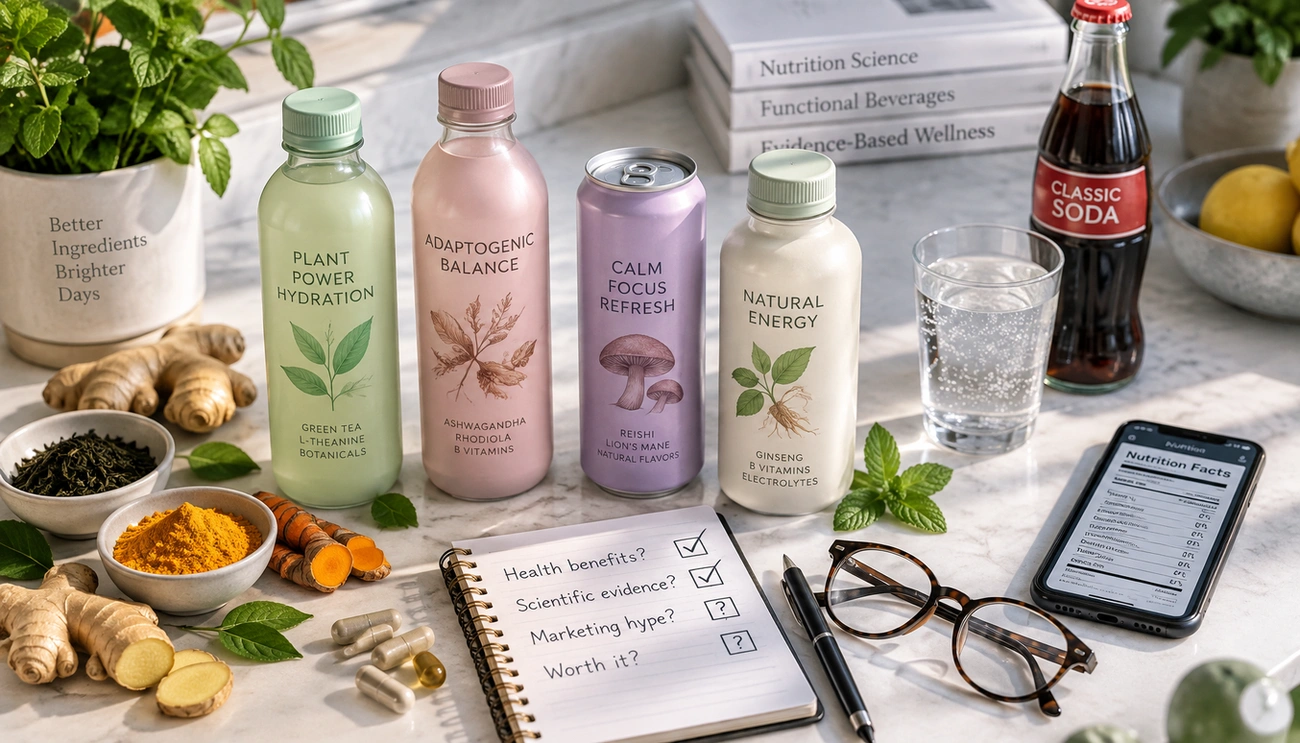
Functional soft drinks have become a fixture of the drinks market. Demand for these products is rising sharply in 2026, with no less than 80% of product development focusing on adaptogenic plants and mushrooms with stress-reducing properties. Added vitamins, minerals, probiotics and herbs are intended to promote relaxation and focus.
But what does that mean for you as a hospitality business owner or retailer? Do functional soft drinks really deliver what they promise, or is it mainly clever marketing? That is exactly the question we answer with a fresh look at the market.
We look at what the science says, which ingredients actually work and how you can put this trend to commercial use in your range. That way, you can not only surprise your customers but also give them realistic advice about what functional soft drinks genuinely offer.
WHAT ARE FUNCTIONAL SOFT DRINKS AND WHAT HEALTH BENEFITS DO THEY PROMISE?
Functional soft drinks are drinks with added ingredients intended to deliver a specific health or performance effect. The difference from ordinary soft drinks lies in the targeted ingredient profile. Manufacturers add substances such as electrolytes, probiotics or adaptogens with the aim of achieving a measurable effect. This clearly distinguishes a functional drink from an ordinary cola or lemonade.
The market breaks down into five main categories:
Protein soft drinks are a fast-growing subcategory that certainly deserves attention. These carbonated drinks contain 15–20 grams of protein per can with minimal sugar content. In addition, many functional soft drinks contain prebiotic fibres or digestive enzymes. Industry experts predict that functional soft drinks will account for as much as 15% of the carbonated drinks market in 2026. That is an opportunity you, as a retailer or hospitality business owner, will not want to miss.
Important to know: functional drinks are not medicines. Under EU regulations, medical claims such as "cures" or "treats" are prohibited. Manufacturers may only state that a substance "can contribute to" a normal bodily function, provided that claim appears in the EU register. Product knowledge helps you advise customers realistically and reliably about what these drinks actually offer.
WHAT DOES THE SCIENCE SAY: DO FUNCTIONAL SOFT DRINKS REALLY WORK?
The scientific evidence behind many of the promised benefits still lags well behind the marketing claims. Adaptogens, the plant extracts that are supposed to reduce stress, have a major problem: in most cases, robust scientific research is lacking. Small studies and animal experiments do show that certain adaptogens such as ashwagandha and rhodiola can lower stress hormones, but large-scale clinical trials remain limited. There are indications, but no hard, conclusive evidence for the effectiveness of the main adaptogens.
The strength of the evidence varies considerably by ingredient. Electrolytes such as sodium and potassium have strong scientific support for hydration and muscle function. Magnesium shows strong evidence in cases of deficiency, but only moderate evidence at normal intake levels. Probiotics work depending on the bacterial strain and dosage. Prebiotic fibres in soft drinks produce short-chain fatty acids that nourish gut cells and reduce inflammation. In this way, not every ingredient delivers the same result, and that difference is precisely what you as a retailer need to know.
Many products are nevertheless over-promised. Evidence for detox claims is almost entirely absent. So choose brands that are transparent about dosages and scientific backing. Claims must comply with strict European regulations and appear in the official EU register. With that product knowledge, you can advise your customers realistically and tell them exactly what functional soft drinks actually offer. You will notice the difference straight away in the trust your customers place in you.
HOW RETAILERS AND HOSPITALITY BUSINESSES CAN MAKE SMART USE OF FUNCTIONAL SOFT DRINKS IN 2026
Smart positioning makes all the difference. Retailers who arrange functional soft drinks by customer need rather than product format consistently perform better. A customer looking for calm simply won't find magnesium drinks among the colas. Dedicated shelves for functional drinks or secondary placements alongside lunch-to-go attract the right target group. This creates more value for your customer and immediately increases the chance of a repeat purchase.
Sugar-free is also playing an increasingly important role. 48% of consumers now opt for sugar-free soft drinks, an increase since 2021, with 53% of hospitality choices being sugar-free. The drinks menu influences no less than 65% of all guest choices. That means your presentation is just as valuable as your range itself.
The hospitality sector uses functional soft drinks as a fully-fledged alcohol-free alternative. A hotel in Vught serves them as a substitute for wine, while bistro bar Hartig in Rotterdam uses them to make mocktails. This approach increases both the experiential value and the average spend per bill. When consumers discover their first kombucha or matcha latte through foodservice, it later drives retail purchases too. In this way, hospitality acts as a discovery channel for your brand.
Private label development offers additional opportunities here. Manufacturers develop bespoke functional drinks that fit seamlessly with your brand identity and target audience. Function wins the first purchase; taste wins the second. So choose brands and formulas that are strong on both counts. Claims must, of course, be correct under EU Regulation 1924/2006, as regulators such as the NVWA (the Netherlands Food and Consumer Product Safety Authority) are monitoring the category closely. You can really count on us when it comes to a range that meets every requirement.
CONCLUSION
Functional soft drinks offer clear opportunities, but the scientific backing remains mixed. Electrolytes and specific probiotics show proven effects. Adaptogens, on the other hand, often deliver more marketing promise than hard science.
Your success depends on product knowledge and realistic advice. Choose brands with transparent claims that comply with EU regulations, and position these drinks according to your customers' needs rather than by product category. When you manage to surprise your customers in this way, you can be sure they will keep coming back.
Ultimately, taste determines the repeat purchase. Function wins the first purchase; taste wins the second. So test your range based on your target audience. That way, selling functional soft drinks becomes far more rewarding for you, but above all for your customers.
In doing so, focus on suppliers that guarantee fast delivery and reliable stock availability. You can really count on us.