
A-brands, competitive prices
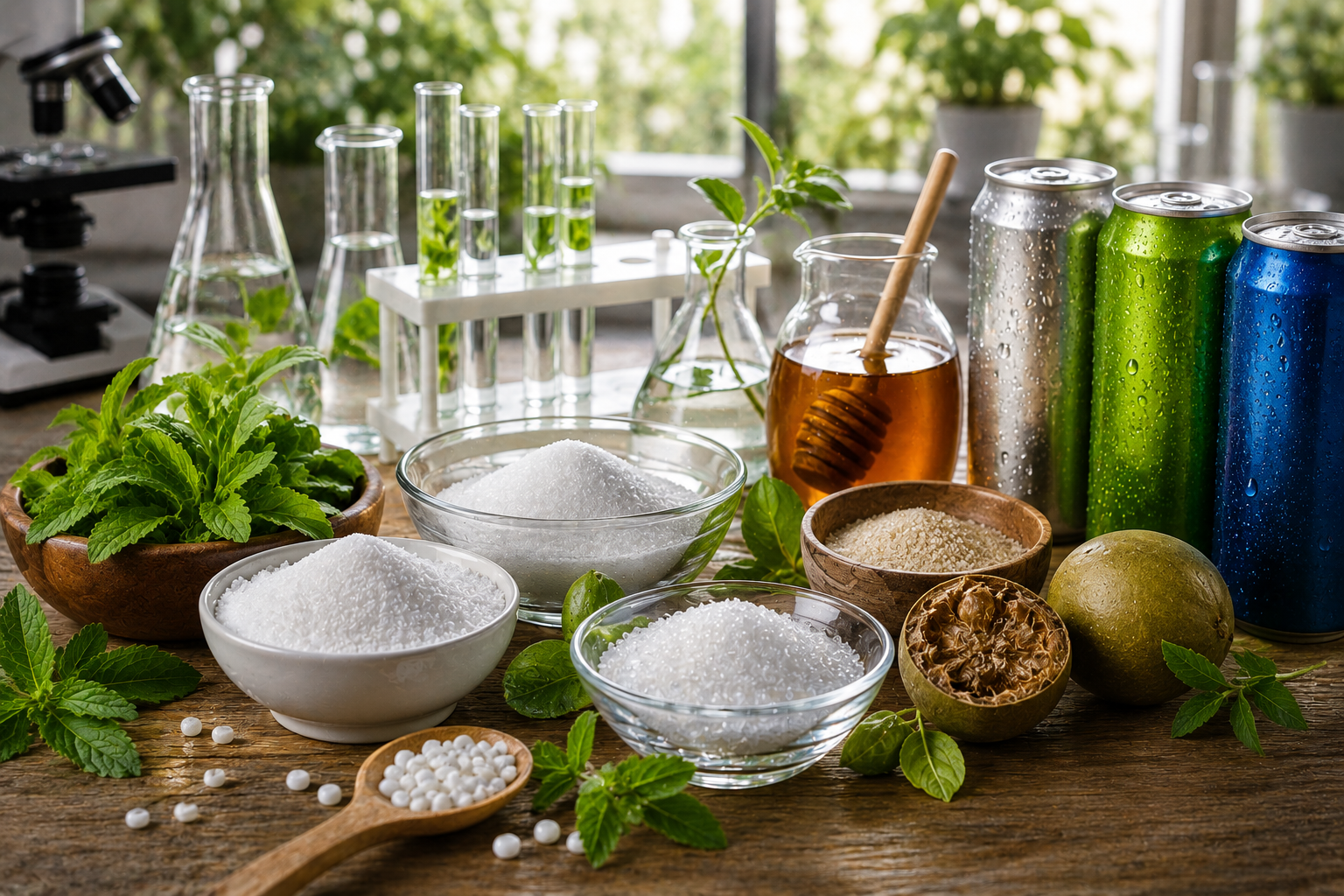
Natural sweeteners are more popular than ever. You will find them in low-calorie soft drinks, sugar-free dairy products, protein bars and an increasing number of products across your range. For hospitality businesses and retailers, demand for sugar-free products containing natural sweeteners has become a commercial reality. But what does scientific research actually tell us about these alternatives?
There are more than fifteen approved sweeteners, each with its own properties and effects. We take a closer look at the facts. What exactly are natural sweeteners, why do they remain attractive to your customers, and what practical challenges can you expect when purchasing and selling these products? With concrete market information and practical insights, we help you make informed decisions for your business.
WHAT ARE NATURAL SWEETENERS AND WHY DO BUSINESSES CHOOSE THEM?
The term ‘natural sweeteners’ is commercially attractive, but scientifically it is considerably more complex than marketing might suggest. Sweeteners can be divided into two main categories: intense sweeteners, which are 50 to 3,000 times sweeter than sugar, and polyols, which range from around half as sweet to equally as sweet as sugar. Both categories include naturally extracted and synthetically produced varieties.
All approved sweeteners have an E-number. This indicates that the European Food Safety Authority (EFSA) has assessed the substances and deemed them safe for use. Steviol glycosides (E960), better known as stevia, are extracted from the leaves of the stevia plant through a chemical process. Erythritol occurs naturally in mushrooms and pears, but for commercial use it is produced industrially. In other words, every ‘natural’ label has its own story behind it.
For businesses, the main attraction lies in consumer perception. Manufacturers choose ingredients with a more positive and natural image to give products a ‘clean label’. Toxicologist Professor Tytgat emphasises, however, that whether a substance is natural or artificial does not determine its safety. All sweeteners undergo the same evaluation procedures before they are allowed onto the market. An E-number therefore provides retailers and hospitality businesses with a reliable point of reference.
From a commercial perspective, you are also paying for this marketing value. Consumers are prepared to pay more for products with natural claims, making clean-label ingredients commercially attractive additions to your range.
WHY NATURAL SWEETENERS REMAIN POPULAR IN HOSPITALITY AND RETAIL
The clean-label movement is not a temporary trend. Retailers and hospitality businesses that continue to invest in sugar-free products containing natural sweeteners are responding to a structural shift in purchasing behaviour. Worldwide, 75% of consumers say they are willing to pay more for products without artificial colours, flavours and preservatives. In Europe, 99% of manufacturers consider clean label essential to their strategy, while 73% of consumers are prepared to pay a premium for products containing familiar ingredients.
You can see this directly reflected in product ranges and sales. Coca-Cola Zero Sugar increased its market share from 9% to 25% following changes to presentation and shelf positioning at McDonald’s. The soft drink manufacturer expects sugar-free cola to overtake sugar-sweetened varieties in both penetration and volume within two years. This means the shift towards sweeteners is no longer simply about consumer preferences; it has also become a tangible purchasing and margin consideration for your business.
Generational differences also influence purchasing decisions. Millennials and Gen Z show the highest willingness to pay, at 46% and 45% respectively, compared with 31% among Gen X and 19% among baby boomers. If you can appeal to younger customers with recognisable, transparent ingredients, you increase the likelihood of them returning.
Transparency remains the driving factor. Consumers trust brands that communicate clearly about the origin and composition of their ingredients. As a result, clean-label products are expected to account for more than 70% of product portfolios within two years, compared with 52% in 2021.
PRACTICAL CHALLENGES WHEN PURCHASING AND SELLING PRODUCTS WITH NATURAL SWEETENERS
Quality control is the first point to consider when purchasing products containing natural sweeteners. Genuine stevia consists of at least 95% steviol glycosides (E960). However, supermarkets also sell so-called ‘fake stevia’ products containing only 2–3% steviol glycosides. The remainder may consist of maltodextrin, aspartame, erythritol or sugar. If the label states ‘stevia-based’, it often refers to precisely these types of products. As a buyer, you could therefore easily purchase the wrong product without realising it.
Taste complaints can also lead to product returns. Stevioside, the less expensive form of steviol glycoside, has a bitter taste. Rebaudioside A 98% tastes sweeter but is considerably more expensive. Customers can also become confused about dosage: one teaspoon of stevia extract can provide the same level of sweetness as a cup of sugar. Using too much immediately creates a liquorice-like aftertaste, which can ultimately result in complaints and returns.
Polyols can also cause digestive problems for some customers. Products containing more than 10% added polyols must carry the warning ‘excessive consumption may produce laxative effects’ on the label. Erythritol may be consumed at a maximum of 0.7 grams per kilogram of body weight per day. Consumers may experience flatulence, bloating or diarrhoea. Correct labelling is therefore not optional but a regulatory requirement.
Finally, storage conditions affect the shelf life of your stock. Sweetener powders can remain usable for up to five years when stored in a cool, dark and dry environment. Liquid stevia has a shorter shelf life. Proper storage therefore helps you avoid unnecessary stock write-offs.
CONCLUSION
Natural sweeteners offer genuine commercial opportunities for your product range. Consumer demand continues to grow, particularly among younger generations who are prepared to pay more for clean-label products. Offering the right products containing natural sweeteners can therefore become increasingly valuable for both your business and your customers.
However, your success depends on critical purchasing decisions. Select suppliers based on transparency, check stevia percentages and pay close attention to correct labelling. Communicate clearly about ingredients and ensure products are stored under the right conditions. This helps you reduce returns while maintaining customer confidence.
Your commercial advantage lies in combining market knowledge with practical product expertise. The final purchasing decisions are yours, but we are confident that well-informed choices will deliver the greatest value for your business.