
A-brands, competitive prices
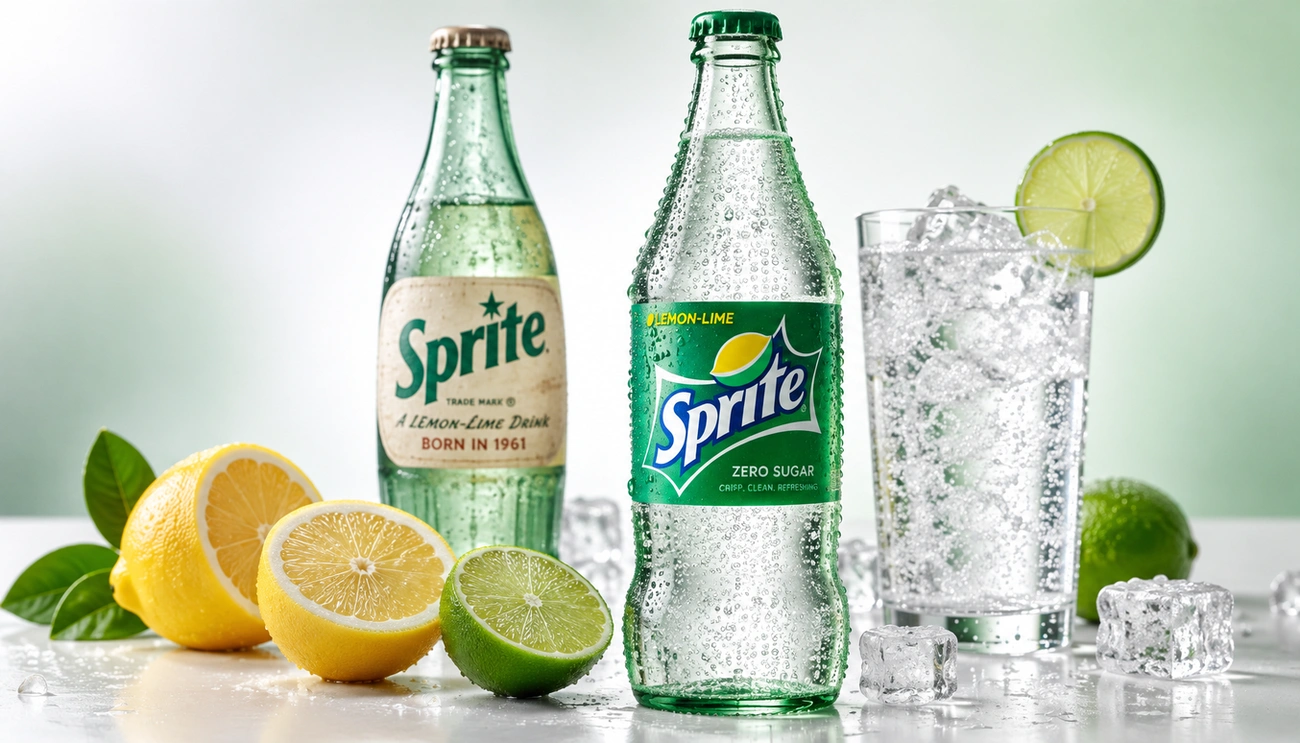
Sprite started out as a carbonated soft drink with 92 kilocalories per can. Today, the brand is completely sugar-free. That is a striking turn in Sprite's history, and one that you, as a hospitality business owner or retailer, cannot ignore.
Around 11.6 billion bottles of Sprite are produced worldwide every year. That makes it one of the best-selling soft drinks in the world. At the same time, the Netherlands is the 'European champion' when it comes to sugary drinks. This means that the shift towards sugar-free variants offers major opportunities right here. You can respond to the growing demand for healthier alternatives without your customers having to compromise on taste.
Sprite's history shows how a strong brand adapts to the market. As a buyer, you can use this to your advantage: understanding the background of Sprite helps you make smarter range choices, better stock decisions and achieve greater customer satisfaction. In this article, you will read which variants are available, how to use Sprite effectively and what opportunities this brand offers you for increased turnover.
WHAT IS SPRITE?
Sprite has been around longer than many people think. The brand originated in 1959 in West Germany under the name Fanta Klare Zitrone, a clear variant within the Fanta line. Two years later, The Coca-Cola Company brought the product to the United States as a direct competitor to 7UP, which had existed since 1929. Growth was rapid: by 1967, Sprite was already available in 39 countries, with a strong focus on the youth market.
The lemon-lime soft drink contains sparkling water, sugar, food acids such as citric acid and tartaric acid, natural lemon-lime flavourings, sodium citrates as an acidity regulator and sodium benzoate as a preservative. What really sets Sprite apart is its taste: sweeter and sharper than 7UP, with a distinct lemony bite. And what about the commercial benefits for restaurants serving spicy dishes? The lemon-lime combination neutralises the heat, making Sprite more than just a thirst quencher.
Sprite dominates with an international market share of 8%, twice that of 7UP at 4%, particularly in the United States, Europe and Africa. The range has meanwhile grown to more than 17 variants. This gives you, as a buyer, the flexibility to tailor your stock and range to different target groups without compromising on brand strength.
WHY SPRITE REMAINS POPULAR IN 2026
Consumers choose differently today than they did five years ago. 48% now opt for sugar-free soft drinks, an increase of 41% since 2021. That is not a passing trend. It is a structural shift. And it affects you directly as a buyer.
Look at the hospitality sector: 53% of all drink choices are now sugar-free, and the drinks menu influences 65% of all guest choices. When your range matches what your guests want, you will see it reflected in your turnover. It is that simple.
The Netherlands led the way here. In March 2017, Coca-Cola made Sprite completely sugar-free in the Netherlands, the first country in the world to do so. Not as an extra variant alongside the regular product, but as the new standard. The first sales results spoke volumes: the same volumes, even though three quarters of sales had previously been the regular version. This is possible because the lemon flavour effectively masks the bitter aftertaste of sweeteners. Customers can barely taste the difference.
The impact on the portfolio is tangible. The switch removed 3.75 billion kilocalories and saved 900,000 kilos of sugar each year. More than 50% of sales at Coca-Cola Europacific Partners Netherlands now consist of sugar-free or low-calorie drinks. On top of that, the brand introduced Sprite Chill Zero Sugar with mint, responding to the growing demand for variety within sugar-free options.
This shift therefore gives you, as a buyer, certainty in your stock planning. The market is moving structurally towards zero variants. You can really build on this trend in your long-term range planning.
HOW BUSINESSES MAKE SMART USE OF SPRITE
Retailers and hospitality business owners who make good use of Sprite do so with a clear strategy. Sprite does not position itself as an ordinary thirst quencher, but as the ideal accompaniment to spicy meals. The 'Heat Happens' campaign specifically targets Gen Z, a target group of which 50% order spicy dishes at least once a week. The result: 8% growth in Consumer Reach Points and 34 million new buyers worldwide. Sprite thus shows that smart positioning contributes directly to your turnover.
Foodservice partnerships reinforce this further. McDonald's integrates Sprite into meal bundles and digital menu boards, specifically alongside the McSpicy sandwich. That is no coincidence. Meal deals and QSR partnerships noticeably increase turnover per transaction. In addition, the brand introduced Sprite Chill with a cooling effect and Sprite + Tea, inspired by viral social trends. And what about the additional consumption occasions this creates for your drinks menu?
Sprite also offers practical benefits for hospitality. Serve it chilled at 4°C in 20 cl glass bottles for a premium look. The soft drink also works excellently as a mixer in cocktails with vodka, gin or rum. Unopened bottles can be returned free of charge to party hire companies, which makes your stock management a lot easier. Vending placements in busy locations such as transport hubs and offices increase impulse purchases, while the clear plastic bottles improve recyclability. This way, you can make Sprite work for your business on several fronts at once.
VARIANTS, PACKAGING AND APPLICATIONS
Sprite does not come in just one version. Coca-Cola produces the brand across Europe with different sweeteners: sugar only, a combination of sugar and low-calorie sweeteners, or fully low-calorie. In the Netherlands, Sprite Regular contains 9 grams of sugar per 100 ml, while Sprite Zero Sugar is completely sugar-free with 0 grams of sugars. This allows you to offer the right variant for every customer.
The brand also introduces flavour variants such as Sprite Chill Lemon Mint Zero Sugar with natural mint and lemon-lime flavourings. And what about seasonal editions such as Sprite Tropical Mix with strawberry and pineapple, Sprite Cranberry and lemon-lime-cucumber variants? These limited editions appear seasonally and give you the chance to surprise your customers. When you can surprise your customers, you can be sure they will keep coming back.
Packaging formats differ by sales channel, and that is exactly where your choice makes a difference. 20 cl glass bottles in crates of 24 are standard for hospitality. 33 cl cans are suitable for retail, vending and convenience. 50 cl PET bottles serve forecourt and impulse purchases, 1 litre is an intermediate size for grocery, and 1.5 litres targets family purchases and discount channels. Foodservice operators work with 5-litre bag-in-box systems. This way, you can use the right packaging for each channel without unnecessary stock risk.
Recipes vary by country: Sprite Original in Ireland contains 3.3 grams of sugar per 100 ml, while in the UK it contains 4.4 grams. Bear this in mind when purchasing across borders. Dutch Sprite bottles have also been clear rather than green since 2019, which improves recyclability. You can use this as a selling point for sustainability-conscious customers too.
COMMON MISTAKES IN PURCHASING AND SALES
Purchasing seems simple, but small mistakes cost you more than you expect. Incorrect pricing is a good example. Underpricing directly harms your profitability, while overpricing drives customers to the competition. Consumers can compare prices instantly these days. Does your price not match the expected value? Then you will lose market share without even realising it.
Another pitfall is focusing on the lowest unit price alone. Quality and reliability carry more weight when selecting a wholesaler. The cheapest option sounds attractive, but in practice leads to delays, incorrect deliveries or a supplier going bust. Without discipline, you will burn through your budget with choices that seem clever in the short term. Buy small quantities first and test customer responses before increasing your stock.
Service, delivery times and availability determine the continuity of your range. Two to three regular partners for your main categories, supplemented by a few specialists for niche products, provides certainty without unnecessary overheads. Too few suppliers means a risk of shortages and higher prices. Too many suppliers fragments your budget and blocks bulk discounts.
And what about stock errors caused by small habits? Ordering without first checking what is still in stock, placing new stock at the front or buying too many variants of the same product. These are mistakes you can easily avoid. Opened Sprite also keeps for three to seven days in the fridge. You can really count on us for the right advice on your purchasing decisions.
CONCLUSION
Sprite's history makes one thing clear: this brand moves with the market. From sugary classic to fully sugar-free standard. That was no accidental step, but a deliberate choice that pays off commercially.
Align your range with this movement. Put Zero Sugar variants front and centre, use seasonal variants for impulse sales and strengthen your partnerships with foodservice partners wherever possible. Test small volumes first before scaling up. This limits your risk and keeps your cash flow under control.
Choose your suppliers on reliability and service, not just on unit price. The cheapest option is rarely the smartest choice. Two to three regular partners for your main categories give you certainty without unnecessary overheads.
The shift towards sugar-free is here to stay. You can really build on it. Those who align their purchasing strategy with it now will gain a solid lead over the competition.