
A-brands, competitive prices
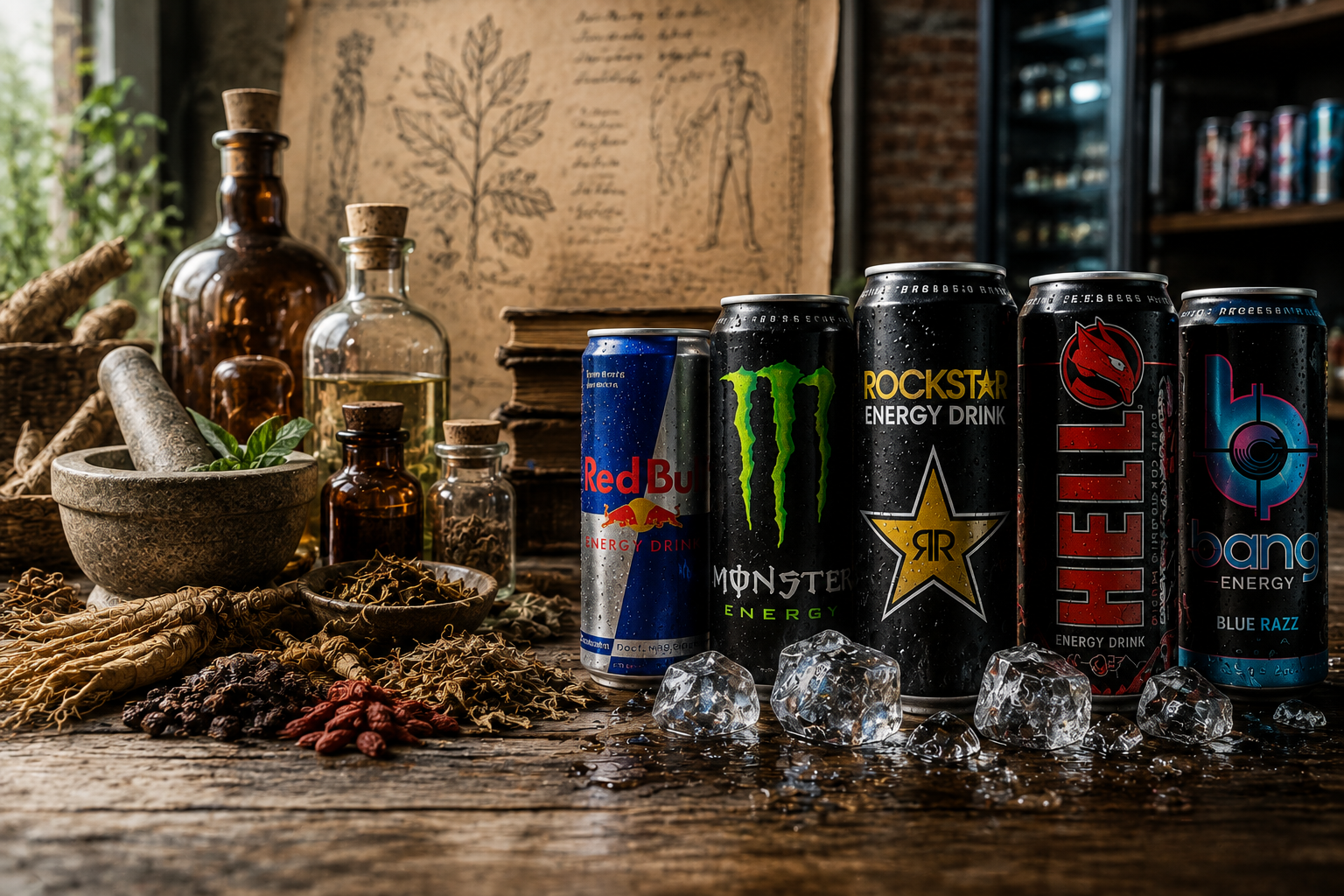
The history of energy drinks begins far beyond Europe. Japan was the starting point, where Lipovitan-D became the first modern energy drink to gain popularity among workers putting in long hours. It is an interesting fact, because who could have imagined at the time that this Japanese workers’ drink would lay the foundations for a global market?
Austrian entrepreneur Dietrich Mateschitz recognised its potential in the 1980s and brought Red Bull to Europe. Since then, the market has continued to grow. Between 2005 and 2010, sales of brands such as Red Bull, Monster and Burn in Belgium were already increasing by 10% annually. That says a great deal about the growth potential of this category.
For the hospitality and retail sectors, energy drinks have therefore become a product category that proves its value time and again. We take you through the development of energy drinks, from their Japanese origins to their modern-day success at the till, and show you how your business can benefit.
THE FIRST ENERGY DRINK: FROM JAPANESE ORIGINS TO GLOBAL EXPANSION
Taisho Pharmaceutical introduced Lipovitan-D in Japan in 1962, the first modern energy drink. The drink was specifically targeted at lorry drivers and factory workers working long shifts. Lipovitan-D contained up to 2,000 mg of taurine per 100 ml bottle, supplemented with caffeine, niacin and B vitamins. Its taste was reminiscent of cough syrup, and the product carried a strict warning not to consume more than one bottle per day. Nevertheless, it proved successful. That says a great deal about the demand that already existed at the time.
Thai entrepreneur Chaleo Yoovidhya studied Lipovitan-D and created his own version in 1976: Krating Daeng. It was a cheaper alternative containing the same active ingredients but with a higher sugar content, specifically tailored to the Thai labour market. The name means ‘red bull’ and refers to taurine, derived from the Latin word for bull. In this way, a Japanese niche product gradually expanded into a much broader market.
Dietrich Mateschitz, marketing director at toothpaste manufacturer Blendax, visited Thailand in 1982 and discovered that Krating Daeng helped relieve his jet lag. He recognised its commercial potential and formed a partnership with Yoovidhya. Between 1984 and 1987, they refined the formula for Western consumers. Red Bull was launched in Austria on 1 April 1987, not as an inexpensive workers’ tonic but as a premium product for young, active Europeans. In this way, an Asian workers’ drink was transformed into a lifestyle category with international growth potential. That is exactly what smart repositioning can do for a product.
FROM NICHE PRODUCT TO MAINSTREAM PHENOMENON: WHY ENERGY DRINKS REMAIN POPULAR IN 2026
The figures speak for themselves. The global energy drink market reached USD 61 billion in 2022 and is projected to grow to USD 86 billion by 2030, representing annual growth of 5.8%. This is not a temporary hype, but a category built on solid foundations.
Young adults between the ages of 18 and 35 form the primary target group. Millennials and Gen Z are particularly receptive to new flavours and brand experiences. Energy drink brands cleverly associate themselves with extreme sports, music festivals and fitness events to reinforce their energetic image. Monster Energy sponsors UFC, Formula 1 and motorsport, while its NASCAR sponsorship alone generated 4.3 billion online impressions in 2016. Red Bull is estimated to invest 25% of its annual revenue in marketing and sells more than 12 billion cans worldwide each year. This keeps these brands top of mind among precisely the consumer groups that hospitality and retail businesses want to reach.
Product innovation plays a central role in this success. Monster’s Ultra range grew by 20% in the US, with Ultra White increasing by as much as 34%. Sugar-free varieties now account for one-third of Monster’s total sales. Then there is the rise of functional ingredients such as adaptogens, nootropics and vitamins designed to support focus and mental clarity. NOCCO combines BCAAs with caffeine and targets athletes and active consumers. This allows you to offer the right variety for virtually every target group.
For hospitality and retail businesses, this means stable sales volumes with premium margins, particularly through impulse purchases at tills, petrol stations and sports venues. The demand is already there. The key is making the most of it.
HOW HOSPITALITY AND RETAIL BUSINESSES CAN SELL ENERGY DRINKS EFFECTIVELY: FROM PACKAGING TO SALES
Packaging formats matter. Red Bull offers standard 250 ml, 355 ml and 473 ml cans, while Monster primarily uses the 500 ml format. The 25 cl format combines practicality with visual impact and works particularly well as a personalised advertising medium for brands looking to stand out. Bars, hotels and restaurants can use these formats effectively during product launches and sporting events.
Energy drinks perform strongly across a wide range of sales channels. Sports canteens, festivals and hospitality venues benefit from chilled impulse sales at tills and refrigerated displays. Tray formats such as 12 x 250 ml, 12 x 330 ml and 24 x 330 ml provide reliable stock levels and make replenishment quick and efficient. Energy drinks are also popular as mixers. Vodka Red Bull remains a favourite in nightclubs, further increasing the sales potential for hospitality venues.
Sugar-free varieties are also growing rapidly. At Monster Energy, zero-sugar products already account for one-third of sales. Supermarkets are experimenting with smaller 250 ml formats to reduce sugar intake, although Monster points out that consumers often simply purchase two smaller cans instead. Offering a choice of formats and sugar-free alternatives can therefore be more effective than restricting pack sizes alone. This allows you to keep customers satisfied while maintaining your sales.
CONCLUSION
Energy drinks have come a long way, from Japanese workers’ tonics to international bestsellers with consistently strong growth figures. This continues to make the category one of the most interesting opportunities for hospitality and retail businesses.
A variety of formats, such as 250 ml and 500 ml cans, combined with sugar-free alternatives, allows you to appeal to different target groups. This broadens your customer appeal without requiring you to take major risks. Tray formats such as 12 x 250 ml or 24 x 330 ml keep stock management organised and replenishment efficient.
Position energy drinks strategically near tills and in refrigerated displays, and you will quickly see the benefits of impulse sales. We sell energy drinks in all popular formats and varieties, ensuring that you always have the right assortment in the right place. You can count on us.