
A-brands, competitive prices
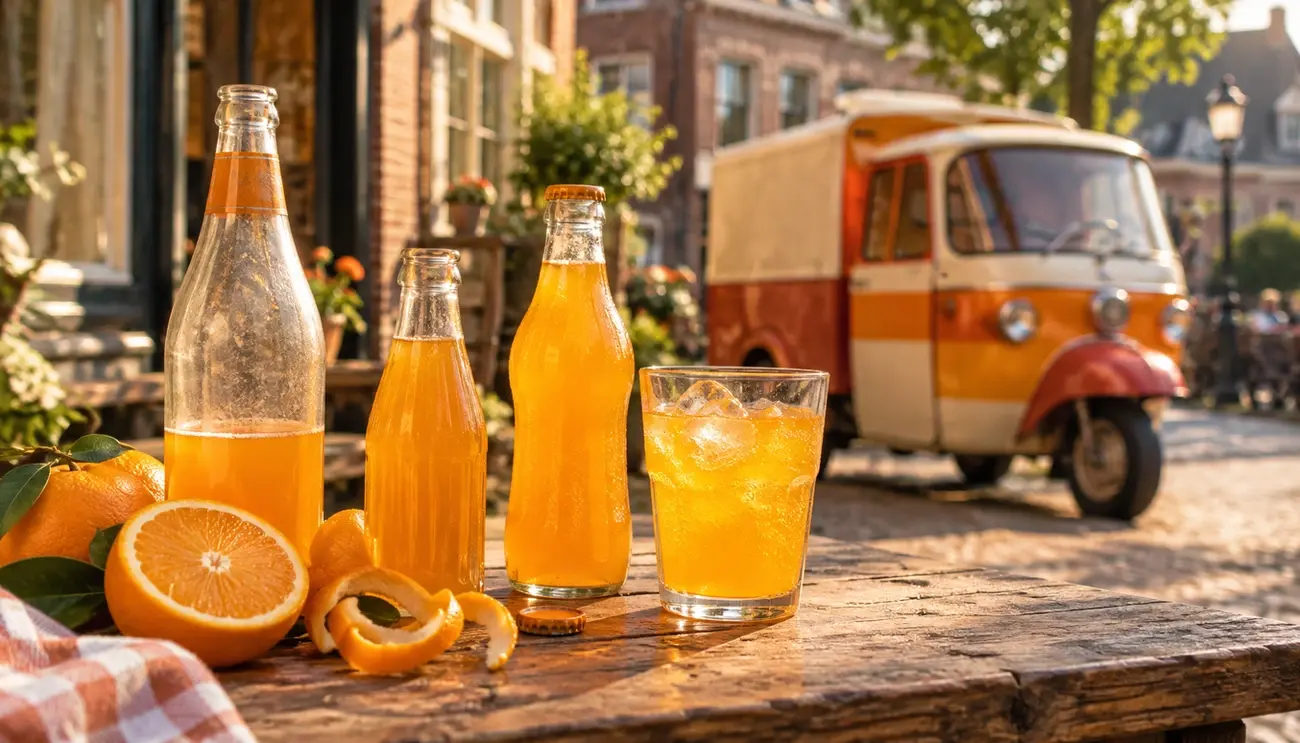
Sisi drink has been around for more than seventy years. Vrumona launched the brand in May 1951 in Bunnik, as the successor to the orange lemonade Si-Si from 1937. That makes sisi soft drink one of the most recognisable soft drinks in the Netherlands, with a brand history stretching back to before the Second World War.
For hospitality operators, retailers and wholesalers, that background is directly relevant. Customers recognise sisi sinas and sisi orange without hesitation, which builds trust at the bar and on the shelf. That is an advantage you, as a business buyer, can make smart use of.
In this article, we look at how sisi drink and the sisi drinks range have developed over the years, the role sisi advertising has played in that lasting recognisability, and how you can translate the nostalgia surrounding sisi orange into concrete choices for your range.
WHAT IS SISI? THE HISTORY OF THE SOFT DRINK
The origins of sisi drink go back further than many people think. As early as 1936, George Becht launched a grapefruit flavour under the name Ja-Ja, followed by an apple flavour under the name si si in 1937. After his death in 1949, his son Cornelius took over the business and linked the si si name to comparable products from Vrumona.
Between 1951 and 1969, the range grew to include flavours such as Cas-Si (blackcurrant), Ceri-Se (cherry) and Grapy (grapefruit). In 1969, the spelling changed to a single word: Sisi. From that point on, the flavours were given new names within the sisi soft drink line:
In 1987, the company sold these flavours to another party, which relaunched them under the name Royal Club. And what remained? Precisely the flavours in which the brand has its strongest roots: sisi sinas and sisi orange.
The recognisability of the sisi drink does not come from the taste alone. Behind that taste lies a brand history of almost ninety years. That is exactly why customers in cafés and shops still ask for sisi rather than a generic orange lemonade. For hospitality operators and retailers, that is a strong starting point.
HOW SISI ADVERTISED AND STAYED RECOGNISABLE UP TO 2026
Sisi advertising has been building brand recognition for decades, and it is second to none. As early as 1957, cabaret artist Wim Sonneveld appeared as ‘Ome Daan de Si-Si-liaan’ on Radio Luxembourg, paid for by Vrumona. A year later, advertising agency Van Maanen introduced the term ‘gevitaliseerd’ (‘vitalised’), which was printed on every bottle until 1969. In 1972 and 1973, Johnny Kraaijkamp and Rijk de Gooyer appeared in television adverts for the sisi drink. In this way, the brand built a familiar face generation after generation.
From 1990, Vrumona adopted the slogan ‘Take it easy, take a SiSi’, often paired with the three-wheeled Piaggio Ape, which quickly earned the nickname ‘SiSi-kar’. And what about the return of that same vehicle in 2017, this time in a commercial featuring athlete Churandy Martina? That campaign deliberately targeted a more grown-up, tropical image with less sugar. In 2022, a further campaign followed via Joe Public, after which a quiet period set in.
Recently, the agency Being There launched a digital-first campaign featuring a self-deprecating sisi mascot. The brand translates its mantra into formats such as ASMR, pre-rolls and memes. This repositioning ties in with a refreshed packaging design and focuses on relaxation in an overstimulating environment. In this way, sisi soft drink stays current without losing its recognisability. For retailers, that is a direct sales opportunity that proves itself at the till every single day.
HOW BUSINESSES MAKE SMART USE OF SISI
Choosing sisi drink is about more than brand recognition alone. Market figures show that 48% of Dutch consumers prefer a sugar-free variant, while 46% continue to choose regular soft drinks. That makes sisi sinas zero sugar and sisi orange 0% logical choices at eye level on the shelf.
Vrumona adjusted the recipe back in 2005, meaning sisi soft drink contains less sugar than comparable brands. The sisi drink therefore ties in directly with a broader market trend: the average amount of sugar in soft drinks fell by 38.2% between 2012 and 2024. For buyers, that is a concrete selling point to pass on to the end customer.
And what about margins in hospitality? A well-served glass of sisi sinas, with ice and a wedge of orange, already increases the margin by 15.2%. With a premium serve, this rises to as much as 27%. A simple glass of sisi orange thus becomes a deliberate choice for greater returns.
Wholesalers respond to this with a flexible range of packaging options. Sisi sinas is available in 1.1 L returnable PET bottles, 1.5 L PET bottles and 10 L BIB systems for post-mix. Larger bag-in-box packaging lowers operating costs and simplifies stock management in cafés and canteens. Smaller formats, by contrast, increase purchase frequency for individual sales. In this way, sisi soft drink fits every format and every type of business.
SISI DRINK: A STRONG BRAND WITH DIRECT COMMERCIAL VALUE
More than seventy years of sisi advertising, flavour development and brand building have produced one thing: a soft drink that customers still ask for. That trust translates directly into turnover, whether you operate in hospitality, retail or wholesale.
Opt for the right packaging format, respond to the growing demand for sugar-free variants and serve the sisi drink the right way. That is how you get the maximum return from a brand that has spoken for itself for decades.
Would you like to add sisi sinas or sisi orange to your range? At Frisdrank.com, you can always request a free, no-obligation quote. That way, you can see for yourself what advantage we can offer you. You are not tied to anything, because that is how flexible we are too.