
A-brands, competitive prices
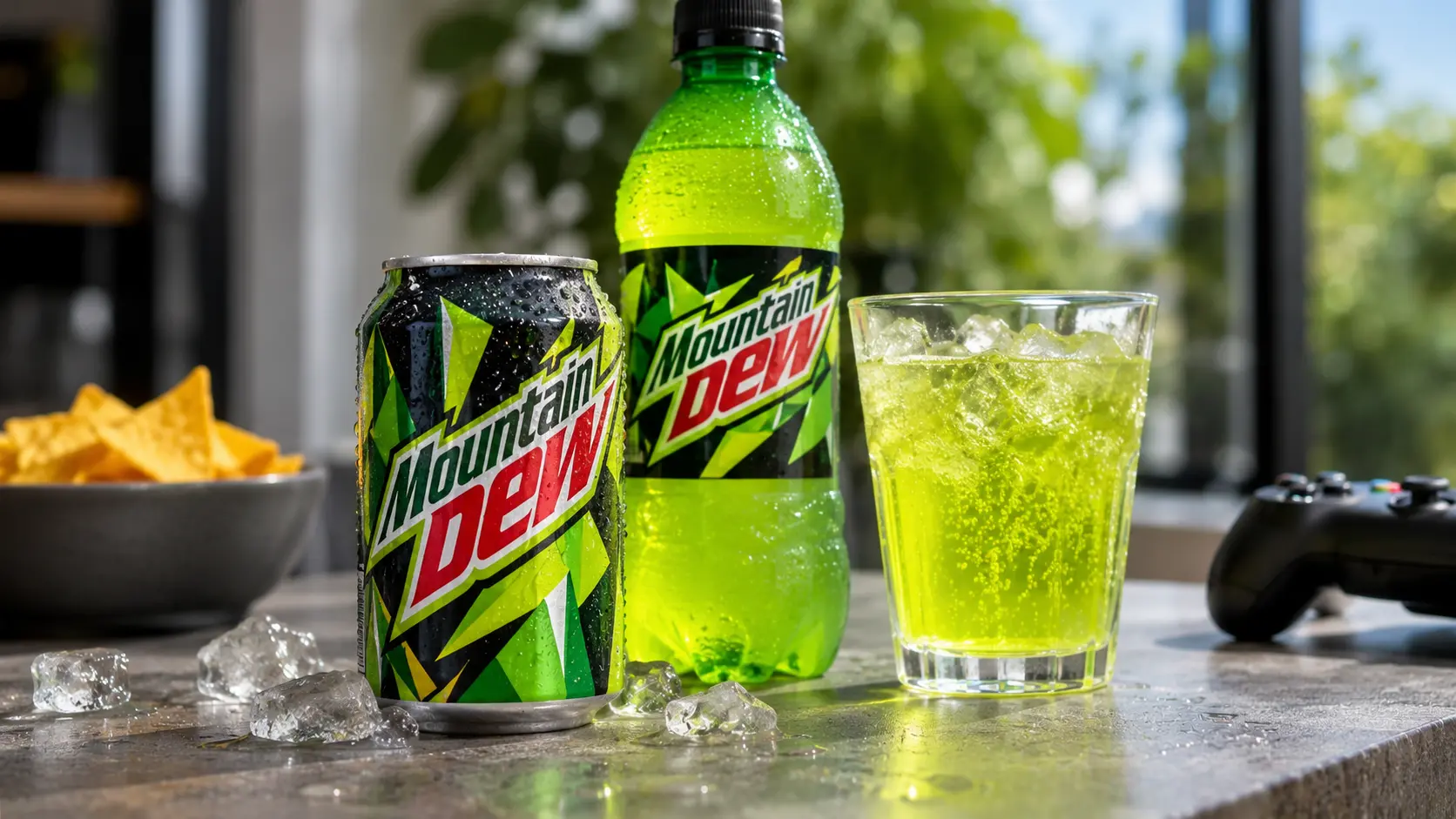
Mountain Dew banned in the Netherlands — it's a question that has occupied hospitality entrepreneurs and retailers for years. Especially after Pepsi stopped production in 2019, much confusion arose about what you as a business buyer can still offer your customers.
The reality is more nuanced than a simple ban. Mountain Dew ranks fourth among best-selling soft drinks in the United States, after Coca-Cola, Pepsi-Cola, and Diet Coke. The Netherlands, however, had a specific problem: the banned ingredient brominated vegetable oil was found in certain flavors, after which supermarkets immediately pulled the products from their shelves. This article shows what exactly happened, which variants are in fact available, and how to use this brand responsibly within your assortment.
WHAT IS MOUNTAIN DEW AND WHERE DOES THE BAN DEBATE COME FROM?
The name Mountain Dew refers to an old Scots-Irish term for whiskey — and that's no coincidence. Bottlers Barney and Ally Hartman developed the drink in Tennessee in the 1940s as a mixer for their whiskey, after they couldn't find a suitable soft drink nearby. What began as a regional citrus flavor eventually grew into a global brand under PepsiCo.
The Netherlands only got acquainted with Mountain Dew on March 4, 2012, produced and bottled by Vrumona. Even back then, health experts voiced criticism about the caffeine content and its impact on dental health.
The ban debate, however, isn't about caffeine. On September 30, 2015, foodwatch discovered brominated vegetable oil (E443) in the Voltage and Code Red flavors — both imported from the United States. This emulsifier keeps citrus oil in solution, but it is on the European Union's list of prohibited substances under Regulation EC 1333/2008. Albert Heijn and Jumbo immediately removed the products from their shelves.
In the US, the substance remained controversially permitted for a long time. It wasn't until July 2024 that the FDA definitively revoked its approval due to health risks.
WHY MOUNTAIN DEW IS STILL RELEVANT FOR RETAILERS AND HOSPITALITY IN 2026
Mountain Dew still holds a firm position in the Dutch market. PepsiCo carries the brand in its Dutch portfolio of fifteen brands, alongside Pepsi, 7UP, and Gatorade. Worldwide, PepsiCo products are consumed more than a billion times a day in over two hundred countries — which shows just how strong this brand stands with consumers.
In terms of availability, there are multiple options. Mountain Dew Citrus Blast is available in a 25 cl can and a 50 cl bottle. The sugar-free variant, Mountain Dew No Sugar, offers the same sparkling citrus flavor without sugar. What many buyers don't know: with 13 mg of caffeine per 100 ml, Mountain Dew legally falls outside the energy drink category, whose threshold is 15 mg/100 ml.
Demand for American import variants is growing, driven by nostalgia and platforms such as TikTok. Popular flavors for your assortment include:
For retailers and hospitality businesses, this means higher margins than standard soft drinks, plus a distinctive offering that stimulates impulse purchases. Wholesalers such as Voov Energy supply Mountain Dew by the case, layer, or pallet.
PURCHASING MOUNTAIN DEW: COMMON MISTAKES AND PRACTICAL GUIDELINES
Retailers and hospitality entrepreneurs regularly run into the same questions when purchasing Mountain Dew. Is Mountain Dew banned in the Netherlands as of 2026? No. The current European variants comply with all labeling rules, including mandatory listing of ingredients, allergens, and nutritional values in a minimum font size of 1.2 mm. That information must also appear on the label in Dutch.
When importing, pay specific attention to the caffeine content. The Dutch Commodities Act (Warenwet) allows a maximum of 350 mg of caffeine per liter of soft drink — which comes down to 88 mg per 250 ml can. American variants such as Mountain Dew AMP (142 mg per 16 fl oz) or Mountain Dew Energy/Rise (180 mg per 16 oz) therefore fall under stricter energy drink regulations with mandatory warning text.
Common purchasing mistakes:
When in doubt, always work with a supplier that delivers EU-compliant variants. That way, your assortment, inventory, and legal compliance stay in order.
CONCLUSION
Mountain Dew banned in the Netherlands — it remains a persistent myth. The current EU variants comply with all applicable rules. If you purchase American import variants, pay attention to the caffeine content and labeling requirements. That is the only real point of attention for buyers and retailers.
Therefore, always work with a reliable supplier that delivers EU-compliant products and provides full batch information. As a European B2B wholesaler, Frisdrank.com offers a wide assortment of soft drinks and import beverages — including Mountain Dew variants — for hospitality, retail, and wholesale. That way, your assortment stays profitable, distinctive, and legally compliant.