
A-brands, competitive prices
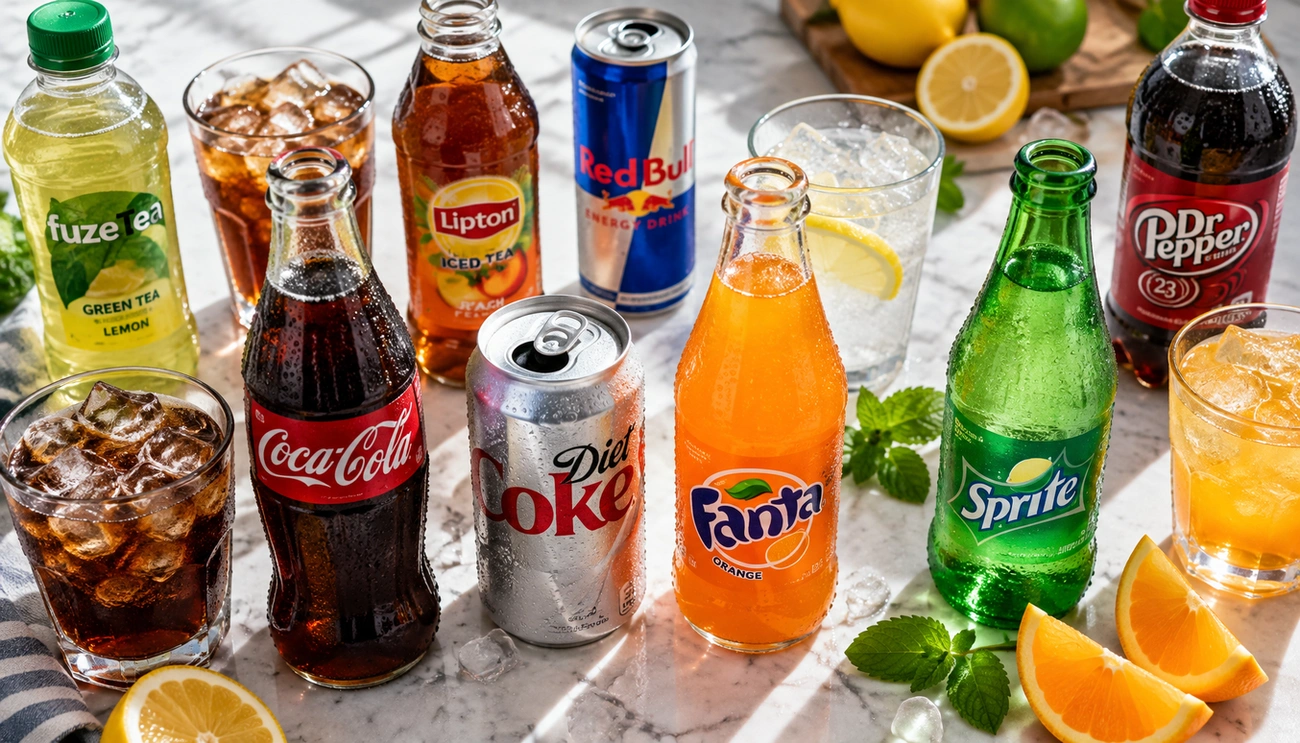
Which types of soft drinks do your customers order most often? Cola remains by far the most popular choice among Dutch consumers, with 96 percent of consumers regularly drinking soft drinks. Alongside that, cola variants, orange soda and iced tea consistently top the sales charts.
For hospitality and retail businesses, stocking these types of soft drinks is crucial. It allows you to respond optimally to customer demand while maintaining an attractive margin. Once you know exactly which soft drinks are ordered most often, you can tailor your range accordingly.
This article shows which types of soft drinks are the most popular, why these brands will remain dominant in 2026, and how you as a business owner can benefit from this. You'll get practical insights to make your range stronger and more profitable.
WHAT ARE THE MOST ORDERED TYPES OF SOFT DRINKS?
Cola accounts for 64 out of every 100 glasses of carbonated soft drinks. That share has grown steadily: in 2000, it stood at 54 percent of the market. Coca-Cola and Pepsi top the sales charts, with orange soda and iced tea firmly in second and third place. The Dutch consume 1.2 billion litres of soft drinks every year. Those are figures no business owner can ignore.
Iced tea, with brands such as Lipton and Fuze Tea, claimed second place thanks to excellent summer performance. Orange sodas such as Fanta and Sisi remain a staple in every range. And what about the lemon-lime varieties of Sprite and 7Up, which also perform exceptionally well? Schweppes, meanwhile, is a reliable choice among mixers and tonics.
Zero and light varieties are now reshaping the playing field. Light soft drinks have reached a 30 percent market share, while zero products account for 15 percent. Pepsi Max now makes up 52 percent of all Pepsi sales. Coca-Cola Zero Sugar dominates on terraces, complemented by Fanta Orange Zero Sugar and Fuze Tea Blueberry Lavender No Sugar. As you can see, sugar-free is no longer a niche but a fully fledged part of the market.
For hospitality and retail, this points to a clear strategy. Stock at least three cola variants, two iced tea options, and classic orange and lemon-lime sodas. Together, these types of soft drinks cover 80 percent of customer demand. That way, you can be sure you'll always be able to serve your customers what they're looking for.
WHY THESE SOFT DRINKS WILL REMAIN POPULAR IN 2026
Health awareness is increasingly driving the market for different types of soft drinks. Today, 77 percent of soft drink consumers consciously choose a specific product, with 62 percent citing lower or zero sugar content as an important factor. This translates directly to your shelves: 48 percent of consumers opt for sugar-free soft drinks, up from 41 percent in 2021.
Manufacturers were quick to respond. Since 2012, the average sugar content in soft drinks has fallen by 41.5 percent. In addition, 78 percent of consumers notice a wider range on offer, particularly due to greater variety in sugar content and flavours. As a result, consumers now keep more types of soft drinks at home on average than they did five years ago. For you as a business owner, this means a greater opportunity to surprise your customers with the right choice at the right moment.
Sustainability also plays a role: it influences purchasing decisions for 46 percent of consumers, while 29 percent consistently make sustainable choices. The premium segment is also growing steadily, with 52 percent of consumers buying premium non-alcoholic beverages. Young people aged 18 to 34 choose premium in 54 percent of cases, compared to 35 percent of those over 55. If you know which target group you serve, you can tailor your range to them very precisely.
For 2026, Coca-Cola expects organic revenue growth of 4 to 5 percent, despite increasingly critical consumers. Various types of soft drinks remain popular because manufacturers and retailers cleverly adapt to changing preferences. As a business owner, you can take direct advantage of this.
HOW RETAILERS AND HOSPITALITY BUSINESSES CAN SMARTLY RESPOND TO DEMAND
Do you know what your drinks menu does for your revenue? In hospitality, 53 percent of all drinks ordered are soft drinks. Moreover, your drinks menu influences 65 percent of the choices guests make. Smart presentation and the right variety therefore directly boost your revenue.
Packaging variety creates new buying occasions. Retailers are expanding with multiple formats, from mini cans to glass bottles made specifically for retail. Smaller 25 cl packs cater to portion control for both sugared and sugar-free products. Secondary placements, displays and targeted promotions on zero drinks help capitalise on the growth opportunity this category offers. This also gives you room to run the occasional price promotion and surprise your customers.
Private label development offers additional opportunities on top of that. Manufacturers develop custom functional drinks for hospitality concepts and retail chains, matched to brand identity and target audience. This gives you control over both margin and positioning. That makes selling soft drinks far more interesting for you, and above all for your customers.
And what about expanding your range with entirely new categories? Probiotic drinks for gut health such as water kefir and kombucha, energy drinks with natural caffeine from maté or green tea, adaptogenic drinks with herbs, and CBD sodas for relaxation all complement your offering. When you can surprise your customers with drinks like these, you can be sure they'll keep coming back.
Finally, hospitality businesses benefit from so-called bookending behaviour: guests start or end their evening alcohol-free and drink alcohol in between, which extends their stay. Homemade drinks such as iced tea, kombucha and lemonades offer the highest margins thanks to their low cost price and exclusivity. This leaves you with an attractive margin and room to make your offering truly distinctive.
CONCLUSION
Cola variants, iced tea and orange soda form the foundation of every strong range. That much is clear. But it's the choices around them that make the difference. Stocking at least three cola options, two iced tea variants and the right sugar-free alternatives is where a profitable soft drink offering begins.
If you also respond to health awareness and premium trends, you'll maintain an attractive margin while your customers get exactly what they're looking for. Packaging variety and private label development offer further commercial opportunities for 2026 and beyond.
Various types of soft drinks remain popular through smart adaptation to changing preferences. When you can surprise your customers with the right offering, you can be sure they'll keep coming back.