
A-brands, competitive prices
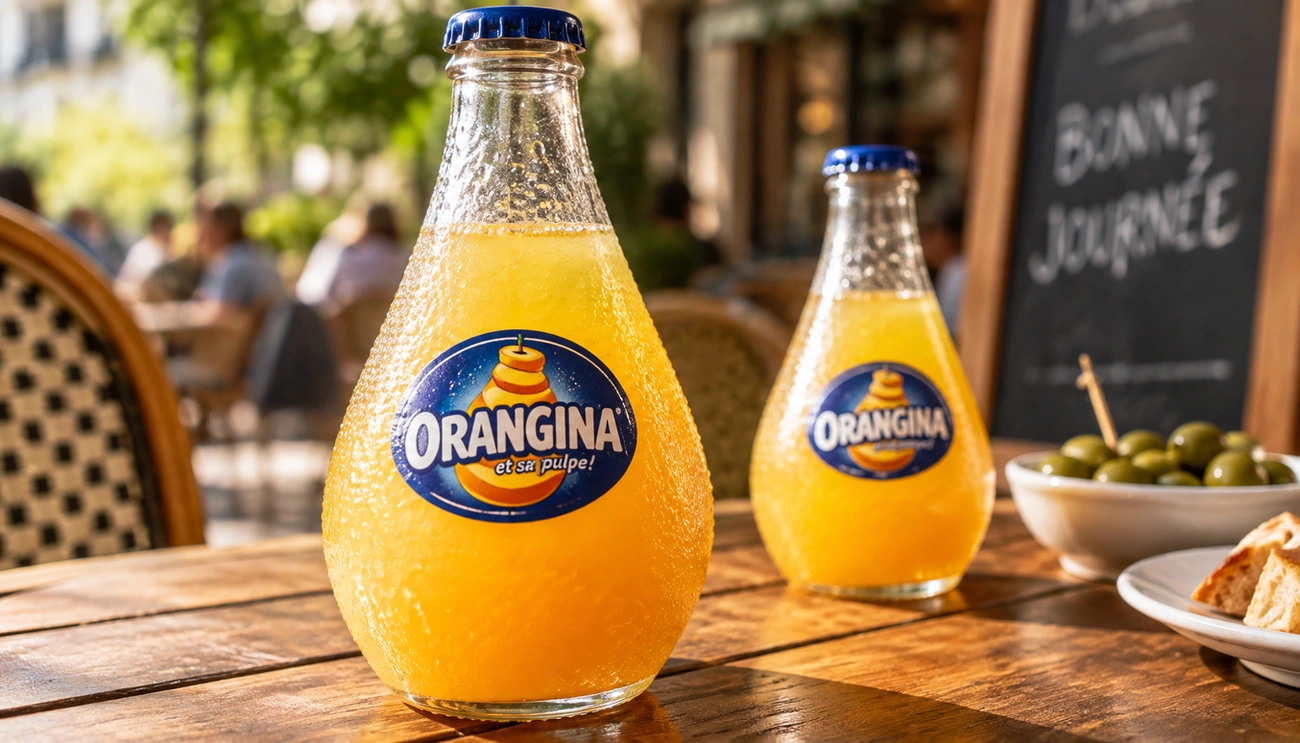
Orangina bottles have a recognisable rounded shape that has stood out on hospitality and retail shelves for decades. Since 1953, this bottle has set itself apart through its unique design and the presence of real orange pulp. In this way, Orangina combines aesthetics with an authentic taste experience that immediately appeals to customers.
For business buyers, this recognisable design offers a direct advantage. Customers recognise the brand instantly and associate it with quality. Orangina glass bottles are available in various sizes, including the popular 25 cl Orangina bottles, ideal for hospitality and vending. The unchanged recipe and high juice content make Orangina a strong choice for your range.
In this article, you'll read the story behind the design, why the bottle shape remains successful, and how to use these products smartly for maximum revenue.
WHAT IS ORANGINA AND WHAT MAKES THE BOTTLE SO SPECIAL?
Orangina has a rich history that begins in 1935. At the Marseille trade fair, Léon Beton, a French businessman from Algeria, met the Spanish pharmacist Agustín Trigo Miralles. Beton, who owned orange plantations in the Mitidja plain, bought the formula for the concentrated drink, originally called "Naranjina". In 1936, the product was launched as the first orange soda with orange pulp.
The most distinctive element followed in 1951, when Jean-Claude Beton introduced the iconic 250 ml bottle. The bottle was given a rounded shape resembling an orange, with a texture that imitates the fruit's peel. This turned a potential drawback into a commercial advantage. The pulp that sinks to the bottom became part of the brand experience through the "Shake me" positioning. A clever move that still works to this day.
The drink contains 10% citrus juice and 2% orange pulp, giving customers a natural taste experience without artificial colourings. The unique recipe has remained unchanged for 75 years. This ensures reliable quality and high customer loyalty. Orangina glass bottles in the 25 cl format are an excellent fit for hospitality operations. The recognisable design and premium look make all the difference on your shelves.
WHY THE ORANGINA BOTTLE SHAPE REMAINS POPULAR IN 2026
Orangina holds on to its original brand values while other soft drink brands are under pressure to reinvent themselves. And it works. Nostalgia makes consumers more optimistic and boosts their self-confidence. Research even shows that nostalgic feelings make people willing to spend more money on products. For hospitality and retail, this means direct added value: customers recognise Orangina glass bottles immediately and associate them with positive memories.
The authentic look is further strengthened by brand character Bulby, directly inspired by the brand's rich bottle history. This reinforces its iconic status and gives fans opportunities to create their own content. In addition, the glass packaging cleverly taps into perceptions of sustainability. Glass exudes luxury and suits a modern, minimalist lifestyle. In this way, the packaging gives your product a premium appearance that increases customer satisfaction and strengthens your brand positioning.
And what about the effect on your margin? The combination of recognisable design, unchanged recipe and high-quality glass creates customer loyalty that translates directly into stable revenue. 25 cl Orangina bottles are a perfect fit for hospitality operations thanks to their instant recognisability and premium positioning that justifies higher margins.
HOW BUSINESSES MAKE SMART USE OF ORANGINA BOTTLES
Hospitality operators know exactly what they have in 25 cl Orangina bottles. On terraces, at events and for home delivery, the compact glass bottle fits perfectly into the offering. Make sure staff gently shake the bottle before use so that the 2% orange pulp is evenly distributed. Serve chilled at 4°C, in a glass with ice cubes and a slice of orange. This gives guests a complete taste experience they won't soon forget.
And what about vending machines in offices and business premises? Employees have direct access to their favourite soft drink without leaving the workplace. You put the range together yourself and adjust it whenever you like. In this way, Orangina glass bottles combine convenience with the recognisability employees appreciate every day.
For retail, visual merchandising techniques are particularly effective. Rotating displays show the distinctive Orangina bottle from every angle, without anyone having to turn it by hand. Illuminated back walls attract attention in dimly lit spaces and give premium products the positioning they deserve. Shelf signs with QR codes or product information inform customers right at the point of sale. This increases visibility and encourages impulse purchases, without extra staff effort.
ORANGINA VARIANTS, PACKAGING AND SIZES
Orangina offers business customers a choice of different flavour profiles. In addition to the original orange soda with 12% citrus juice and 2% pulp, there are variants such as Orangina Zero for a low-calorie option, Red Orange with a more intense flavour, and Tropical with eight types of fruit including mango, pineapple and passion fruit. This way, you can offer the right variant for every target group and preference.
When it comes to packaging, you can choose between glass, PET and cans. 25 cl Orangina glass bottles deliver a premium look for hospitality tables and terraces. For on-the-go consumption or home delivery, 50 cl PET bottles are more practical. And what about 33 cl cans for vending machines and chilled display cabinets? Large formats such as 150 cl PET bottles serve families and office locations. In this way, Orangina fits virtually every operating model.
Orangina bottles are available in crates of 24 or trays of 12 to 24 units, making bulk purchasing and logistics easy to manage. Moreover, Suntory Group is developing PET bottles made from 100% plant-based materials, with full implementation planned for 2030. You can count on Orangina supporting your sustainability goals without compromising on product quality or recognisability.
COMMON MISTAKES WHEN BUYING AND SELLING ORANGINA
Outdated purchase prices are a common problem when costing Orangina bottles in your range. Businesses calculate with prices that were current months ago, putting pressure on margins. In addition, many operators process VAT incorrectly in their calculations or leave selling prices unchanged for years while purchase costs rise. This directly affects your profitability, especially with premium products such as 25 cl Orangina glass bottles, where customers expect quality and are willing to pay for it.
Another thing that regularly goes wrong is staff instruction. Many consumers forget that they need to shake the drink. The same goes for hospitality staff who pour glasses without mixing the bottle first. Guests then get an inconsistent taste experience, with pulp remaining at the bottom. Train your team to gently shake the bottle before serving so that the 2% orange pulp is evenly distributed. When guests taste Orangina at its best, you can be sure they'll keep coming back.
Businesses also make costing errors by not accounting for the quantities actually used or by failing to record portion sizes. An extensive spreadsheet has little value if the figures aren't kept up to date or aren't used to make decisions. Link cost price to sales data for Orangina bottles to keep a firm grip on actual returns. You can truly rely on this approach to keep your range profitable.
CONCLUSION
Orangina glass bottles combine recognisability with a strong commercial advantage. The unchanged recipe and distinctive design create customer loyalty that translates directly into stable revenue for your range.
Make sure your pricing is calculated correctly and that your staff are trained to give the bottle a quick shake before serving. That way, your guests get the same taste experience every time. In addition, choose formats that suit your operation: 25 cl glass bottles for hospitality terraces, PET for home delivery and cans for vending.
When you align your range, service and stock management well, selling Orangina becomes far more interesting for you, and above all for your customers. You decide how to use this product, but the foundation is there. You can truly rely on Orangina.