
A-brands, competitive prices
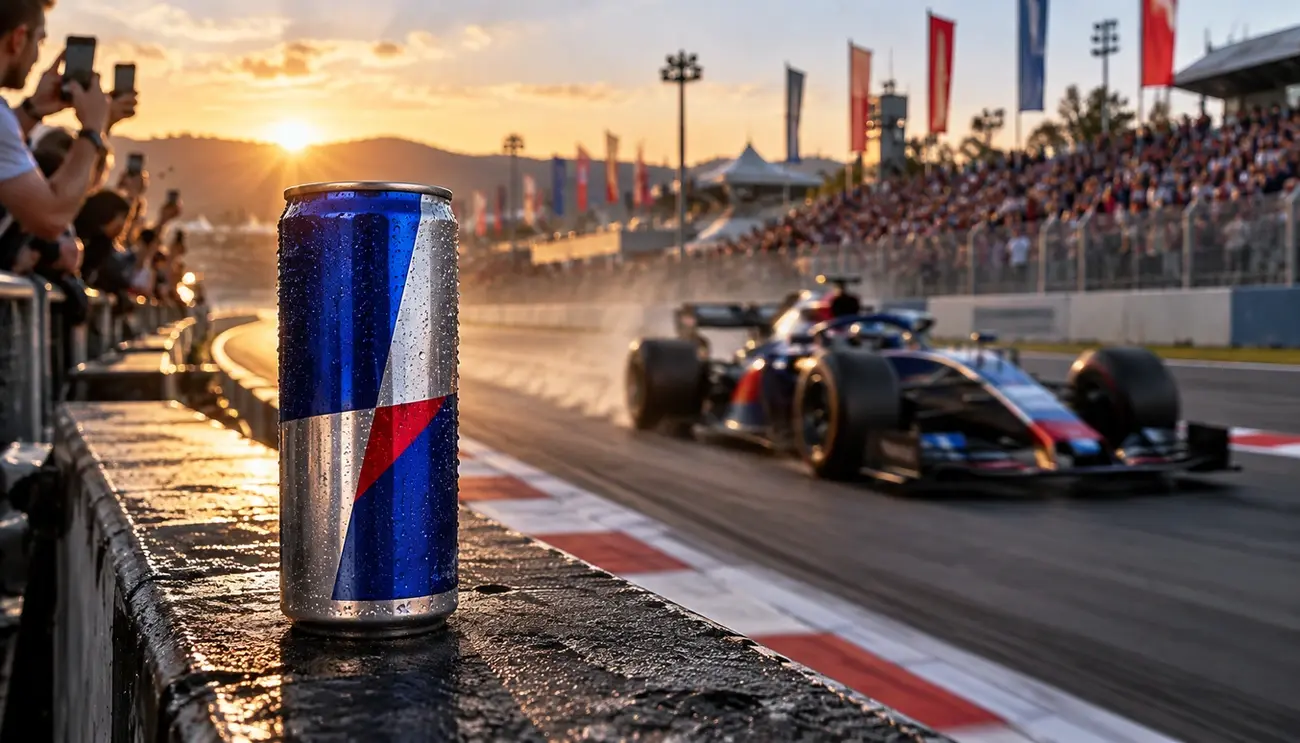
Red Bull is the world's best-known energy drink brand and sold no fewer than 13.969 billion cans in 2025. That success is no accident. The brand built its position on community, sport and media – not on traditional advertising.
For hospitality business owners, retailers and wholesalers, this is directly relevant. Customers recognise Red Bull instantly: thanks to Red Bull Racing, Max Verstappen and Red Bull Powertrains in Formula 1, but also through football clubs such as Red Bull Leipzig and FC Red Bull Salzburg. The product is available in more than 171 countries – a global reach that translates brand recognition on the shop floor into tangible sales.
This article explains why Red Bull is so successful and what hospitality business owners, retailers and wholesalers can learn from it.
WHAT IS RED BULL AND HOW DID ITS SUCCESS BEGIN?
Red Bull's story begins not in a laboratory, but on a business trip to Thailand. In 1982, Dietrich Mateschitz, an Austrian marketer with a background at Unilever and Blendax, comes across the Thai drink Krating Daeng. The drink, developed by Chaleo Yoovidhya at TC Pharmaceutical Industries, relieves his jet lag straight away. Mateschitz immediately sees its commercial potential.
In 1984, Mateschitz and Yoovidhya found Red Bull GmbH together. Each invests €477,105.06 for a 49 per cent stake in the company; the remaining 2 per cent goes to Chaleo's son Chalerm. Between 1984 and 1987, Mateschitz adapts the formula for the Western market: carbonation is added, the formula is refined with a pharmaceutical company, and the original Thai bottle is replaced by a sleek silver can.
The market launch in Austria in 1987 follows an unconventional approach. Mateschitz sends boxes of free cans to universities, guided by one central idea: "sell community, not products". No conventional advertising, no mass media – but a direct presence among the target audience. Within ten years, Red Bull conquers Europe and the United States, laying the foundations for an entirely new market segment: the energy drink.
WHY RED BULL REMAINS POPULAR IN 2026
Red Bull closes 2025 with almost 14 billion cans sold worldwide – revenue growth of 8.6 per cent to €12.2 billion. This keeps the brand almost twice the size of its nearest competitor. Its position as market leader is secure, but the competition is growing.
On the track, the statistics speak for themselves. Red Bull Racing wins no fewer than 21 of the 22 races in the 2023 season, with Max Verstappen accounting for 19 victories and a record score of 575 points. That amounts to a win rate of 95.4 per cent. Red Bull Powertrains supplies the engines behind this success – structurally reinforcing the brand's technical image.
Football clubs such as Red Bull Leipzig and FC Red Bull Salzburg keep brand awareness in Europe consistently high. Even so, competitors are posting clear growth:
Red Bull is responding with new events: the Wings Cup esports competition and the Red Bull BC One World Final in Toronto are scheduled for 2026. The primary target group remains 15 to 45-year-olds – an age group that hospitality business owners and retailers serve every day at the shelf and behind the counter.
HOW BUSINESSES CAN MAKE SMART USE OF RED BULL'S MARKETING STRATEGY
Wholesalers and retailers translate Red Bull's popularity directly into revenue. The key: the right range at the right point of sale. With B2B partners such as BSS Partners, you can order Red Bull with no minimum order quantity and with free delivery in the Netherlands and Belgium. That makes getting started easy for gyms, online shops, convenience stores and sports club canteens.
Within the petrol station channel, Red Bull has built up a dominant position – the largest product group after tobacco, accounting for a 41 per cent share of total soft drinks. A proven pricing strategy is the "1-2-3" deal:
This volume discount lowers the barrier for the customer, without damaging the price image of the sales channel.
Sports club canteens are a separate channel with rules of their own. The advice: display energy drinks separately from regular soft drinks, preferably in a standalone chiller unit. This increases visibility and consciously steers the consumer towards the right choice.
Similar principles apply to vending:
CONCLUSION
Red Bull's success rests on three pillars: community, sport and a consistent brand experience. That model works – not only for the brand itself, but also for the hospitality business owner, retailer or wholesaler who responds to it cleverly. Targeted shelf layout, the right points of sale and a reliable purchasing process make the difference between a missed opportunity and a strongly performing range.
Choose a supplier that delivers quickly, holds sufficient stock and requires no minimum purchase. Frisdrank offers a wide range of energy drinks – including Red Bull – for retailers, hospitality businesses and wholesalers throughout Europe.