
A-brands, competitive prices
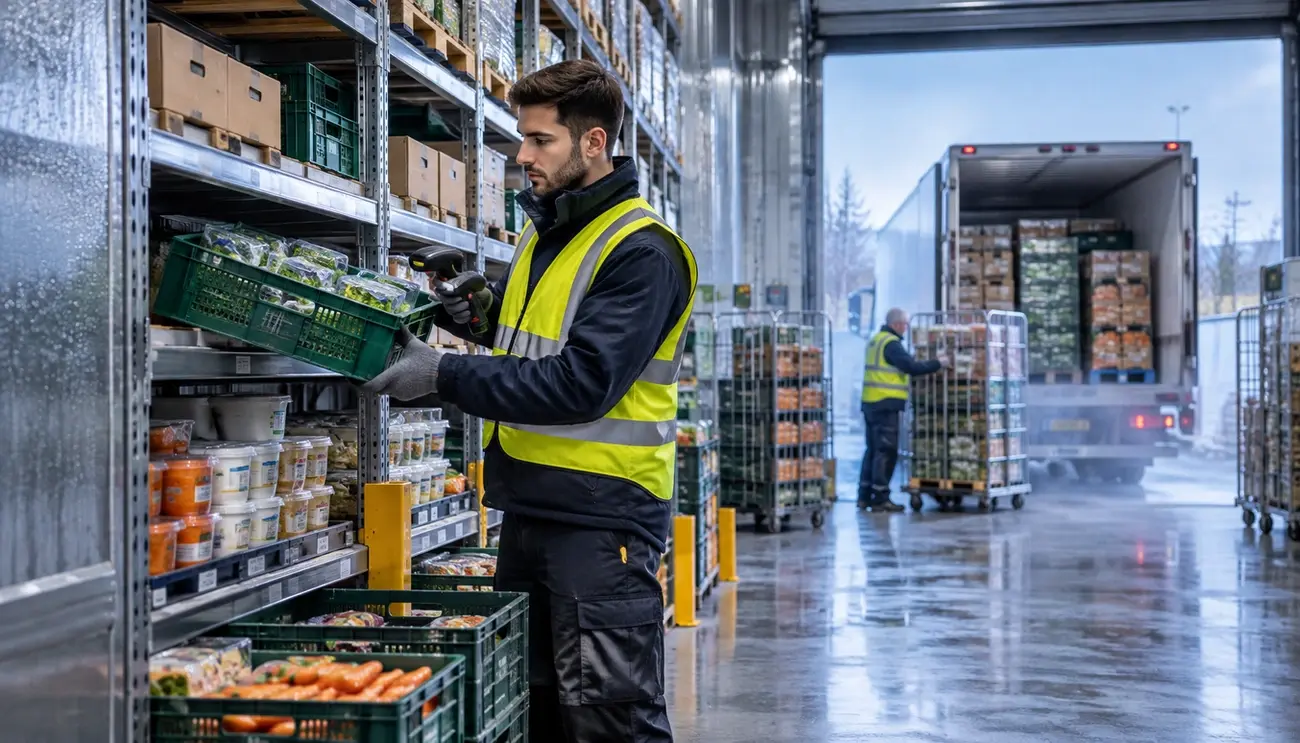
Logistics solutions determine whether best-before dates are met or whether stock is lost unnecessarily. The Netherlands is a major European logistics hub, contributing €65 billion to the economy and employing 673,000 people. At the same time, freight transport is set to grow by a further 20% by 2030, which puts considerably more pressure on your stock management.
For hospitality businesses, retailers and wholesalers, sustainable logistics solutions are therefore not a luxury but a business necessity. The right logistics solution for your warehouse helps prevent best-before waste, limit markdowns and deliver lasting cost savings. This article shows which logistics solutions will improve your warehouse processes straight away and can be applied within your business.
Best-before waste occurs when products are thrown away after their "best before" date, even though their quality is often still perfectly fine. This is fundamentally different from a "use by" date, which relates to food safety and must be strictly observed.
The figures speak for themselves. Every year, around 1.6 billion kilos of food ends up in the bin in the Netherlands, a fifth of everything produced. Worldwide, the figure is a third of all food produced. Of the total waste in the Netherlands, 54% occurs in households, 19% during production, 11% in hospitality and 8% in retail.
And what about consumer behaviour? Almost one in five Dutch people throw a product away as soon as its best-before date has passed. Among young adults this rises to almost four in ten, compared with around one in eight people in their sixties. If consumers better understood the difference between "best before" and "use by", around 10% of food waste could be prevented.
For your business, this adds up. Food waste costs the average Dutch person €134 a year, and a household with two children easily more than €500. With the target of halving food waste by 2030 compared with 2015, warehouse logistics solutions deserve extra attention in 2026. As a hospitality business, retailer or wholesaler, you can make the difference here.
A warehouse logistics solution starts with recording best-before dates at the point of receipt. A modern WMS logs the best-before date, location and origin of each batch, making Excel spreadsheets and loose notes entirely redundant. During picking, the system then applies FEFO (First Expired, First Out): the batch that expires first is the first to leave the warehouse.
A WMS with best-before functionality gives you even more control:
And what about the role of transport? A Transport Management System (TMS) provides real-time tracking and planning across all modes of transport, from road to air. This prevents delays that keep perishable stock in transit for longer than necessary. A TMS also connects to forwarders' systems, so routes are adjusted dynamically when unexpected obstacles arise. As a result, the chain from receipt to delivery remains predictable, and you will see this straight away in reduced best-before waste across your business.
A warehouse logistics solution does more than reduce best-before waste. It also translates directly into measurable cost savings once you put the figures side by side. The ROI formula for supply chain investments is straightforward: profit minus investment costs, divided by investment costs, multiplied by 100. A figure above 20–30% in the first year is considered good. For example, an investment of €50,000 in stock optimisation could save €30,000 in logistics and storage costs and generate €20,000 in additional revenue, meaning the investment pays for itself within a year. And what about supply chain automation costing €80,000 that delivers €120,000 in annual savings? That is a 50% return in the first year.
Effective stock management also lowers the costs of storage, handling and obsolescence on a lasting basis by minimising surplus stock. Fewer products expiring or being damaged means less waste and greater profitability for your business. Best-before date tracking and automatic alerts contribute directly to this. In this way, they safeguard the rotation of perishable products and minimise food waste in a way you can see reflected in your own margins.
Automating internal logistics, for instance with AGVs, often pays for itself sooner than expected too, boosting productivity by as much as 40%. We only start a project once a return within 12 months is achievable. That way, you can be sure every investment in a logistics solution delivers measurable results. You can truly build on us.
A WMS with FEFO control and a well-configured TMS give you a firm grip on best-before dates and transit times. This translates directly into fewer markdowns, less waste and lower storage costs over the long term. The figures back this up: an investment in stock optimisation demonstrably pays for itself within the first year.
Those who invest in the right logistics solutions now will not only benefit from less best-before waste, but also build a reliable and profitable operation. You can truly build on the results, and you will notice it as soon as you take the first step.